

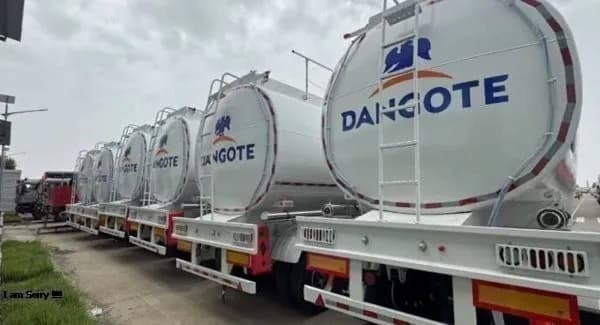
Ten days after the Dangote Petroleum Refinery launched its ₦720 billion compressed natural gas (CNG) truck programme, touted as Nigeria’s biggest downstream logistics reform, the 4,000 trucks remain unseen on the roads. The delay is fuelling debate across the oil and gas sector.
Expectations vs. Reality
The programme was unveiled on June 15 and formally launched on August 15. It promised to overhaul fuel distribution nationwide. Dangote executives stated that the trucks would reduce transport costs, save Nigerians ₦1.7 trillion annually, revive dormant filling stations, support 42 million small businesses, and create 15,000 jobs.
At the launch, the company pledged to bring in more than 60 shiploads of CNG-powered trucks within six weeks. So far, only a small batch has appeared at the refinery’s Ibeju-Lekki site. The nationwide rollout is still missing.
“We expected to feel the impact almost immediately. But distribution patterns remain unchanged,” a Lagos-based independent marketer told Petroleumprice.ng.
Divided Industry
The plan has split industry opinion.
- Supporters: The Independent Petroleum Marketers Association of Nigeria (IPMAN) states that direct delivery from the refinery could alleviate supply bottlenecks, narrow inland–coastal price gaps, and stabilize pump prices.
- Critics: The Petroleum Products Retail Outlets Owners Association of Nigeria (PETROAN) calls it “a monopoly in disguise.” It warns that smaller stations could be forced out.
- Concerns: The Natural Oil and Gas Suppliers Association of Nigeria (NOGASA) says Dangote cannot dominate the chain alone without risking a breakdown.
Market Implications
Dangote’s direct-to-station model bypasses depots and tank farms. That eliminates fees of ₦40–₦100 per litre that often inflate pump prices. Consumers could benefit, but depot operators and transport contractors face major losses.
“The supply chain will get leaner, but depot operators will take the hit,” a Marketer at Apapa port told Petroleumprice.ng
Analysts warn that if regulators fail to act, the model could centralise the market and weaken competition.
Why Dangote Must Speak
For a project sold as transformative, silence is costly. Stakeholders who once praised the initiative now question its feasibility.
Dangote owes Nigerians more than trucks. He owes them transparency. An update on delivery timelines, operational hurdles, and collaboration with existing players could restore confidence and silence speculation.
Ten days may be too early to dismiss the programme. But it is long enough for the market to demand answers. The trucks may yet arrive. For now, Nigeria is left with one question: Where are the 4,000 CNG trucks?