

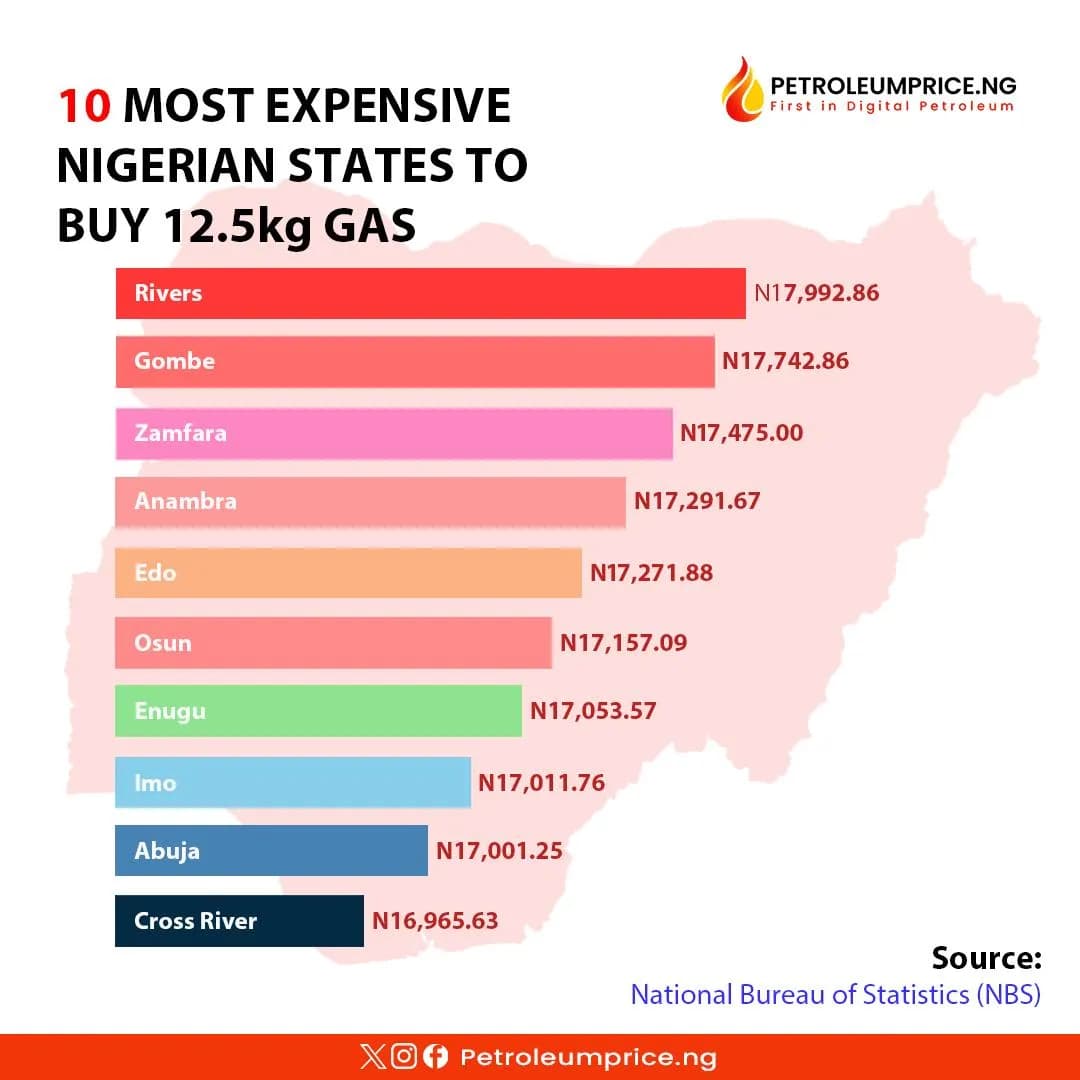
As the cost of living in Nigeria continues to rise, the price of Liquefied Petroleum Gas (LPG) has become a key concern for households. Data from October 2024 reveals significant disparities in the cost of refilling a 12.5kg gas cylinder across different states. This report highlights the ten most expensive states to buy LPG, providing insight into regional price trends.
Overview of the Gas Price Surge
The national average price for refilling a 12.5kg gas cylinder climbed to ₦16,734.55 in October 2024, a 2.58% increase from September. High transportation costs, distribution inefficiencies, and market monopoly by terminal operators were identified as key factors driving these increases. Southern states generally face higher prices due to their heavier reliance on imported gas.
Table: 10 Most Expensive States for 12.5kg Gas (October 2024)
| Rank | State | Price (₦) |
|---|---|---|
| 1 | Rivers | 17,895.00 |
| 2 | Osun | 17,739.06 |
| 3 | Benue | 17,731.25 |
| 4 | Gombe | 17,589.00 |
| 5 | Cross River | 17,563.89 |
| 6 | Bauchi | 17,500.00 |
| 7 | Sokoto | 17,480.00 |
| 8 | Ogun | 17,392.86 |
| 9 | Imo | 17,371.91 |
| 10 | Edo | 17,359.38 |
Regional Trends and Insights
- Southern Nigeria: States like Rivers, Osun, and Cross River dominate the top ranks due to higher logistics costs and demand for imported gas. This is despite the region’s proximity to major ports.
- Northern Nigeria: Surprisingly, northern states such as Bauchi, Gombe, and Sokoto also feature prominently, primarily due to the extended supply chain and associated costs of transportation.
- Policy Impact: The absence of consistent government interventions, such as subsidies or regulated pricing, exacerbates the issue. However, plans to increase local LPG production, including developments at the Dangote Refinery, may bring relief in the long term.
Implications for Consumers
The continuous rise in gas prices forces many households to seek alternatives like kerosene, firewood, or charcoal, which often have adverse environmental impacts. Energy experts suggest promoting local LPG production and improving infrastructure as key solutions to stabilise prices.
The disparity in LPG prices across Nigerian states underscores the need for targeted interventions to address distribution challenges and encourage local production. As LPG remains a vital cooking energy source, affordable pricing is crucial for enhancing the standard of living and reducing the environmental impact of traditional energy alternatives.