

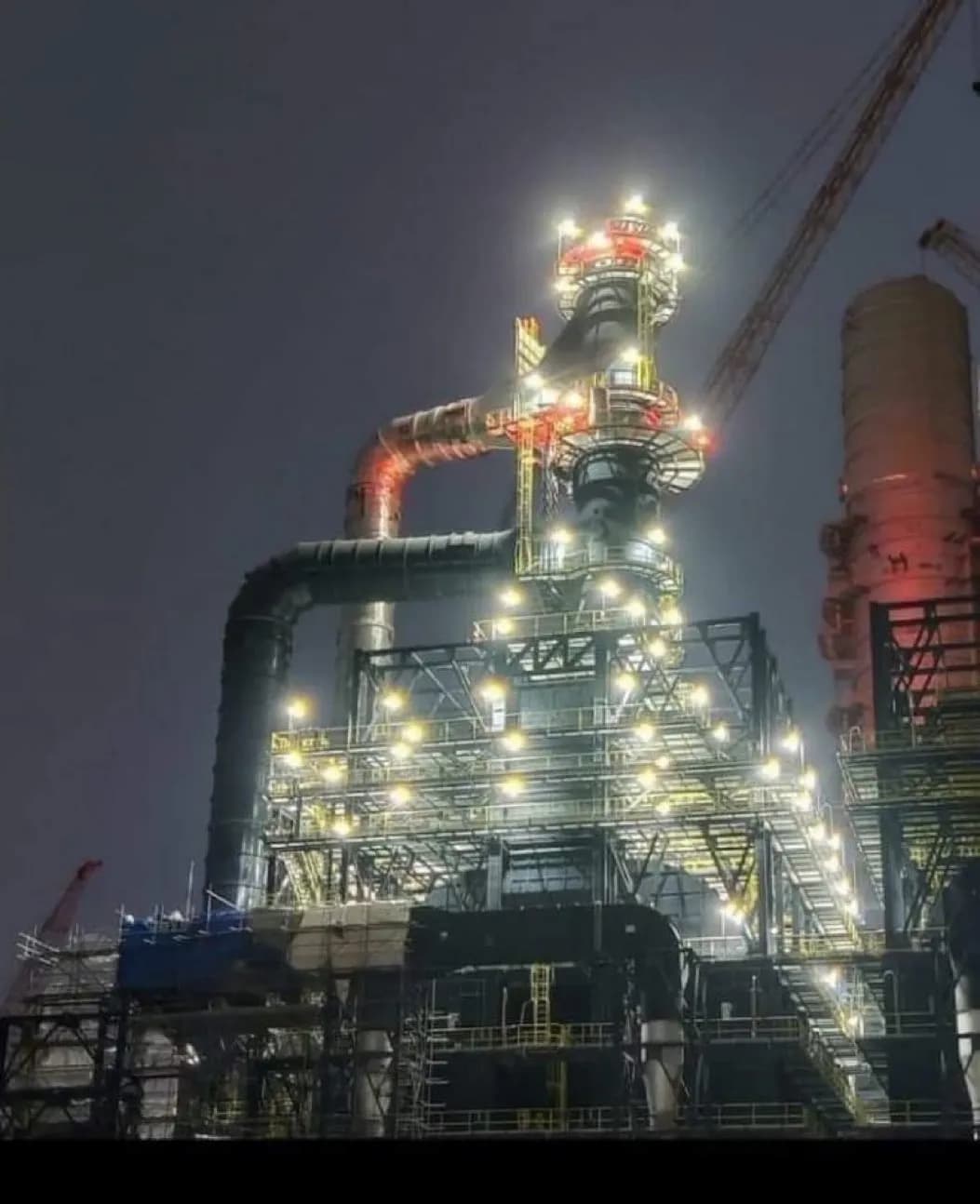
As Africa pushes to reduce dependence on imported fuel, several countries are expanding their refining capacity to meet growing local demand. Here’s a closer look at Africa’s leading oil refiners, their daily processing capacities, and key refineries shaping the continent’s energy future.
1. Nigeria – Africa’s Refining Giant
- Total Refining Capacity: 1.1 million barrels per day (bpd)
- Key Refineries:
- Dangote Refinery (650,000 bpd): The largest in Africa, now producing petrol, jet fuel, and diesel.
- Port Harcourt Refinery (210,000 bpd): Recently rehabilitated and ramping up operations.
- Warri Refinery (125,000 bpd): Set for full operations by mid-2025.
- Kaduna Refinery (110,000 bpd): Undergoing repairs, expected back online soon.
2. Egypt – North Africa’s Refining Hub
- Total Refining Capacity: 893,000 bpd
- Key Refineries:
- Mostorod Refinery (142,000 bpd): A major contributor to domestic fuel production.
- El Nasr Refinery (100,000 bpd): Expanding its processing capability.
- MIDOR Refinery (160,000 bpd): One of Egypt’s most sophisticated facilities.
3. Algeria – A Crude Powerhouse
- Total Refining Capacity: 677,000 bpd
- Key Refineries:
- Skikda Refinery (356,500 bpd): Africa’s second-largest, serving both domestic and export markets.
- Arzew Refinery (85,000 bpd): Primarily produces LPG and refined petroleum for local use.
- Hassi Messaoud Refinery (110,000 bpd): Recently expanded to process more domestic crude.
4. South Africa – Balancing Demand and Supply
- Total Refining Capacity: 500,000 bpd
- Key Refineries:
- Sapref Refinery (180,000 bpd): Temporarily shut but a key player in South Africa’s fuel supply.
- Enref Refinery (135,000 bpd): Supports domestic consumption and regional exports.
- Astron Energy Refinery (100,000 bpd): Reopened in 2023 after an extended shutdown.
5. Angola – Expanding Fast
- Total Refining Capacity: 95,000 bpd (Expanding to 300,000 bpd by 2026)
- Key Refineries:
- Luanda Refinery (65,000 bpd): Recently upgraded to boost production.
- Cabinda Refinery (30,000 bpd, expanding to 60,000 bpd): Expected to start operations in late 2025.
- Lobito Refinery (200,000 bpd – under construction): Will be Angola’s biggest when completed.
6. Ghana – Seeking Refinery Independence
- Total Refining Capacity: 45,000 bpd
- Key Refineries:
- Tema Oil Refinery (45,000 bpd): Struggles with operational challenges but remains Ghana’s main refinery.
7. Sudan – Refining Despite Crisis
- Total Refining Capacity: 120,000 bpd
- Key Refineries:
- Khartoum Refinery (100,000 bpd): Still operational despite ongoing conflicts.
- Port Sudan Refinery (20,000 bpd): Supports regional fuel needs.
What’s Next for Africa’s Refining Industry?
With rising energy demand, more African nations are investing in new refining projects. Nigeria’s Dangote Refinery is a game-changer, but countries like Angola and Egypt are also stepping up. If these expansions continue, Africa could significantly reduce its fuel imports, stabilise local economies, and strengthen energy security.
The road ahead is promising, but challenges remain from funding constraints to refining efficiency. Still, Africa’s refining ambitions are bigger than ever, and the next few years will shape the continent’s fuel future.