

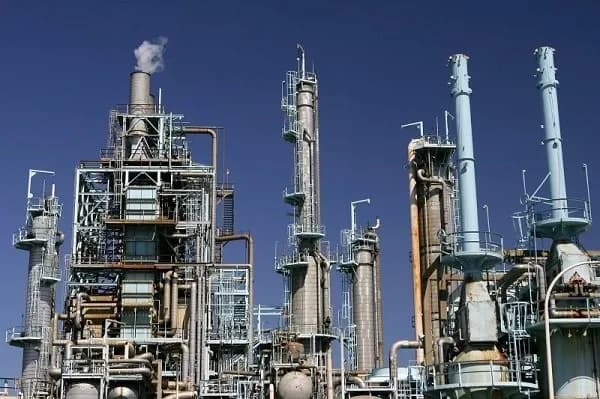
Ghana’s long-idle Tema Oil Refinery (TOR) has finally come back to life, marking a critical turning point for the country’s downstream petroleum sector and the wider West African energy market. After nearly five years offline, the restart signals renewed ambition to curb import dependence, stabilise domestic fuel supply and reclaim lost refining relevance in the sub-region.
For energy watchers in Nigeria, this development is more than a local Ghanaian story. It reshapes regional product flows, alters trade dynamics with the Dangote Refinery and adds a new layer to West Africa’s evolving refining landscape.
Refinery Restart Signals Import Substitution Drive
The state-owned 45,000 barrels-per-day Tema refinery resumed operations after being idle since April 2021. Initial crude runs are averaging about 28,000 bpd, with all product streams reportedly flowing into storage for the first time in several years.
This restart comes at a time when Ghana’s reliance on imported clean petroleum products has ballooned. Fuel imports have more than doubled since 2017, reaching about 128,000 bpd this year, according to vessel-tracking data. Diesel and gasoil account for roughly 65,000 bpd, while gasoline imports stand near 52,000 bpd.
From a downstream economics perspective, Tema’s return offers Ghana a pathway to reduce foreign exchange pressure from fuel imports, improve supply security and regain some pricing leverage in its domestic market.
Implications for Nigeria and Regional Fuel Trade
Nigeria has quietly played a major role in Ghana’s fuel supply gap. The 650,000 bpd Dangote Refinery emerged as Ghana’s largest single supplier this year, exporting about 27,000 bpd of refined products.
With Tema restarting, even at sub-nameplate rates, Ghana may gradually trim its import volumes from regional suppliers, including Nigeria. While this does not immediately threaten Dangote’s export strategy, it introduces competition and reinforces the need for Nigerian refiners to remain cost-efficient, reliable and flexible in export markets.
For West Africa as a whole, Tema’s restart adds incremental refining capacity into a region historically dependent on imports from Europe and, more recently, Nigeria.
Operational Reset and Upgrade Roadmap
The refinery’s revival follows three months of maintenance on its crude distillation unit, completed at the end of October, with regulatory clearance granted in mid-December. A new management team, appointed earlier in the year, was mandated to restore both the CDU and a 14,000 bpd residue fluid catalytic cracker.
Looking ahead, TOR plans to lift crude throughput to full nameplate capacity once a new furnace is integrated into the atmospheric distillation unit. Medium-term upgrades are even more ambitious, including expanding CDU capacity to 60,000 bpd and replacing the existing catalytic reformer with a larger continuous catalytic reforming unit.
If executed successfully, these upgrades could materially improve product yields, operational reliability and refinery margins.
The Ghana Tema Refinery restart is not just a comeback story; it is a strategic move in West Africa’s energy chessboard. For Nigeria, it underscores a shifting regional market where domestic refining strength, efficiency and export competitiveness will increasingly define winners and losers.