

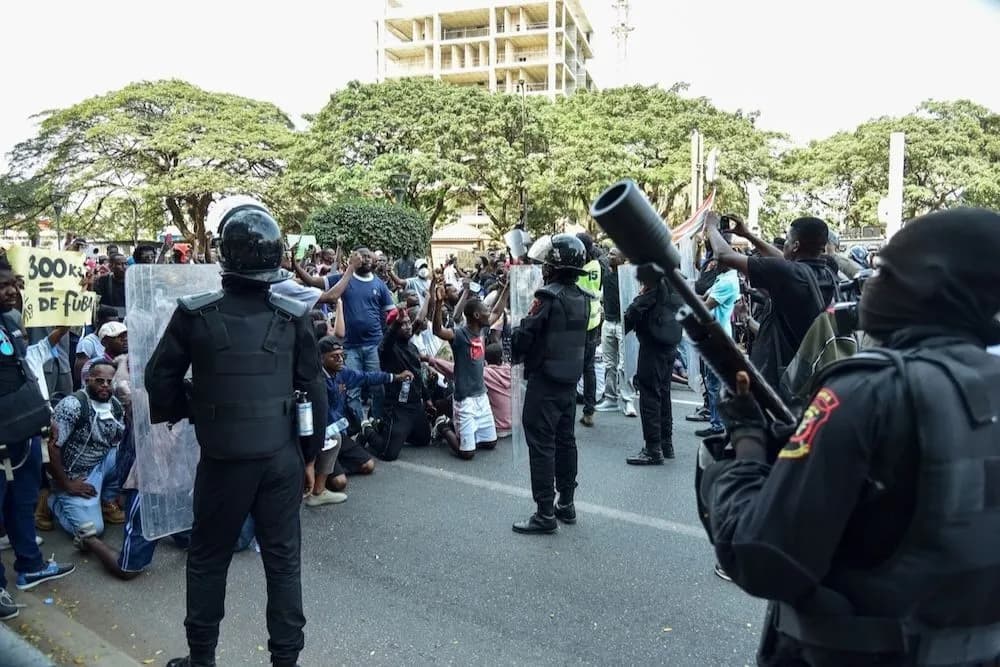
Four people died and more than 500 others were detained following violent protests in Luanda, triggered by a sharp rise in diesel prices. Police confirmed the casualties and mass arrests on Tuesday, as the capital reeled from the worst unrest seen this year.
The protests erupted on Monday after the government raised the diesel price by 30%, moving it from 300 to 400 kwanzas per litre ($0.33 to $0.44). The hike has pushed transport fares up by as much as 50%, placing further strain on households already battling inflation.
City Paralyzed as Violence Spreads
Large parts of Luanda shut down. Minibus taxis, which serve as the main transport mode for residents, went off the roads as drivers began a three-day strike. In Cazenga, Rocha Pinto, and Prenda, demonstrators looted shops and burned vehicles. Gunfire rang out as security forces responded.
“I don’t know how we’ll survive this,” a protester told local broadcaster TV Nzinga. “How do we feed our children when prices climb like this?”
By Tuesday, many shops remained closed, public transport services stalled, and major routes were blocked.
Police Crack Down on Protesters
Deputy Police Commissioner Mateus Rodrigues confirmed the death toll at four but gave no details on the causes. Security forces arrested 100 people on Monday and another 400 overnight. Authorities linked them to looting, rioting, and destruction of public and private property. Vandals targeted at least 45 shops, 25 cars, 20 buses, and several banks.
Anger Grows Over Fuel Policy
Public outrage has grown since the diesel price adjustment took effect on July 1. The move is part of a government effort to reduce long-standing fuel subsidies. Although Angola is one of Africa’s top oil exporters, it imports most of its refined fuel and spends billions to keep domestic prices low.
Critics argue that the reform lacks sufficient protection for the poor. In July 2023, similar protests over petrol price increases turned deadly. Now, with another price spike, unrest has returned.
Rights Groups Accuse Police of Excessive Force
Human Rights Watch condemned security forces for using rubber bullets and tear gas during protests earlier in July. The group described the crackdown as disproportionate and harmful.
As tensions escalate, pressure is mounting on President João Lourenço to review the subsidy phase-out plan. Without relief measures, analysts warn of deeper instability in the months ahead.