

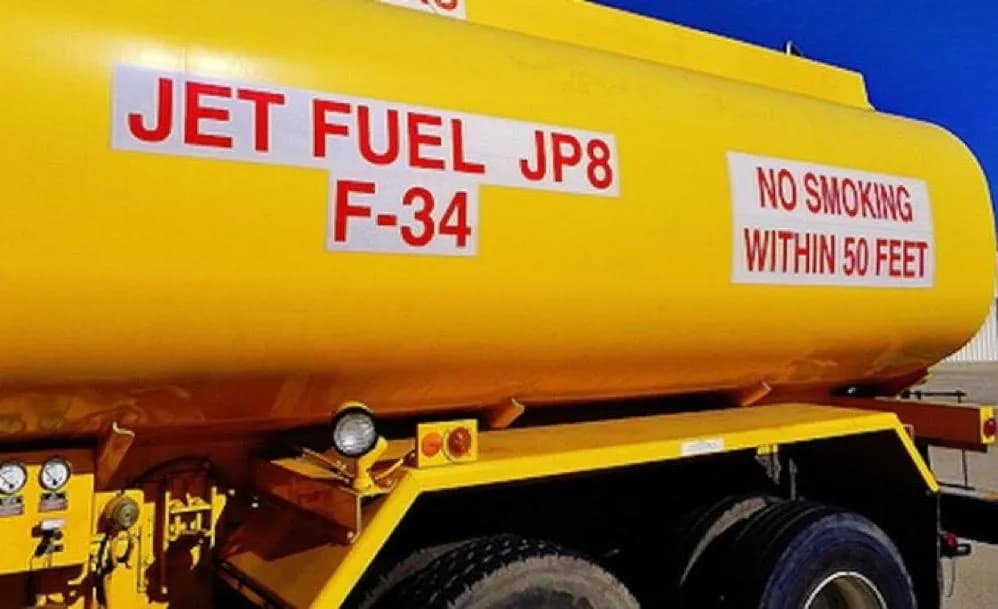
Nigeria’s aviation sector is facing a fresh supply risk, with only two depots, Dangote Petroleum Refinery in Lagos and Matrix Energy in Warri, currently selling aviation turbine kerosene (ATK), also known as Jet A1.
Petroleumprice.ng market intelligence reveals that Dangote currently sells aviation turbine kerosene (ATK) at ₦1,005 per litre, while Matrix Warri lists the product at ₦1,010 per litre. With imports at historically low levels over the past two months, stakeholders fear a tightening supply chain that could push prices higher and tilt the market toward monopolistic control.
“The aviation industry depends almost entirely on private depots for Jet A1,” a Lagos-based fuel trader told Petroleumprice.ng. “If only one or two suppliers dominate, they will have the power to dictate prices, and that’s a dangerous scenario.”
Current import and discharge data show limited replenishment activity:
- SL AREMU – ATK, 10,000 MT – Arrived Aug 1, berth Aug 9 – Depot: Ardova – Discharging in progress
- AINAZI – Jet A1, 44,000 MT – Arrived Aug 6, ETA Aug 12 – Depot: Dangote Refinery – Awaiting berth/loading
- ZEFYROS – Jet A1, 44,000 MT – Arrived Aug 8 – Depot: Dangote Refinery – Awaiting berth/loading
- PROTEUS – Jet A1, 44,000 MT – ETA Aug 14 – Depot: Dangote Refinery – Yet to berth/load
While Ardova is currently discharging a 10,000 MT consignment, industry observers say the volumes are insufficient to stabilise the market. The bulk of scheduled deliveries is concentrated at Dangote’s facility, further consolidating its position as the primary ATK supplier.
Analysts warn that if import diversity does not improve, airlines could face higher operating costs, leading to steeper ticket prices. Petroleumprice.ng projects that prices might hit ₦1,100 per litre if the current market squeeze continues.
Unless additional suppliers enter the market soon, Nigeria’s aviation fuel chain could face both a price surge and an unhealthy dependency on a single dominant player.