

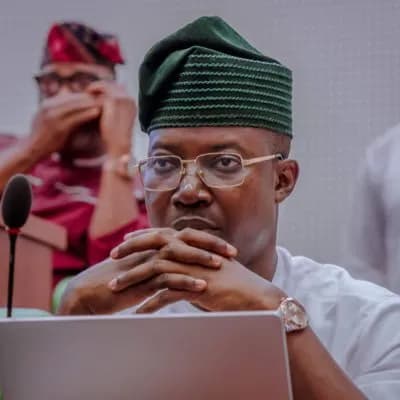
At a recent legislative session, Hon. Sesi Oluwaseun Whingan, who represents Badagry Federal Constituency in the House of Representatives, called for a review of Nigeria’s contraband and restricted goods policy. He also raised concerns about the continued restriction of Premium Motor Spirit (PMS) to border communities following fuel subsidy removal.
Speaking during a public hearing, Hon. Whingan acknowledged the Comptroller-General’s earlier remarks and directed his concerns to the Honourable Minister. He argued that the current list of restricted items should be reconsidered due to its revenue implications.
“I believe it’s time for a review of the items listed as contraband,” he said. “Some of these goods could generate revenue if taxed appropriately.”
Rice Imports and Revenue Potential
The lawmaker cited rice as a key example. He noted that demand in Nigeria exceeds 8 million metric tons. Despite the ban, the commodity still enters the country through informal routes.
He argued that if rice imports were regularized and taxed, Nigeria could earn significant revenue. The current restrictions, he said, are not preventing smuggling.
Concerns Over PMS Access Post-Subsidy
Hon. Whingan questioned the continued restriction of PMS in border areas like Badagry. He pointed out that this policy has remained unchanged, even after fuel subsidies were removed.
“Subsidy has been removed from PMS. So I ask, why is PMS still restricted?” he said. “Some communities in Lagos, including mine, have had no electricity for over a year.”
Residents in these areas rely on generators. The lack of PMS, he added, is worsening living conditions and limiting economic activity.
Call for Alternative Energy Measures
The lawmaker acknowledged government efforts to promote alternative fuels like Compressed Natural Gas (CNG). However, he argued that affected communities need deliberate support.
“If access to PMS is limited, there should be efforts to provide alternatives like CNG,” he added.
Policy Reassessment Recommended
Winga’s remarks reflect the broader debate around balancing border control, economic development, and energy access. His position underscores the need for a policy reassessment—especially for communities most affected by trade and fuel restrictions.