

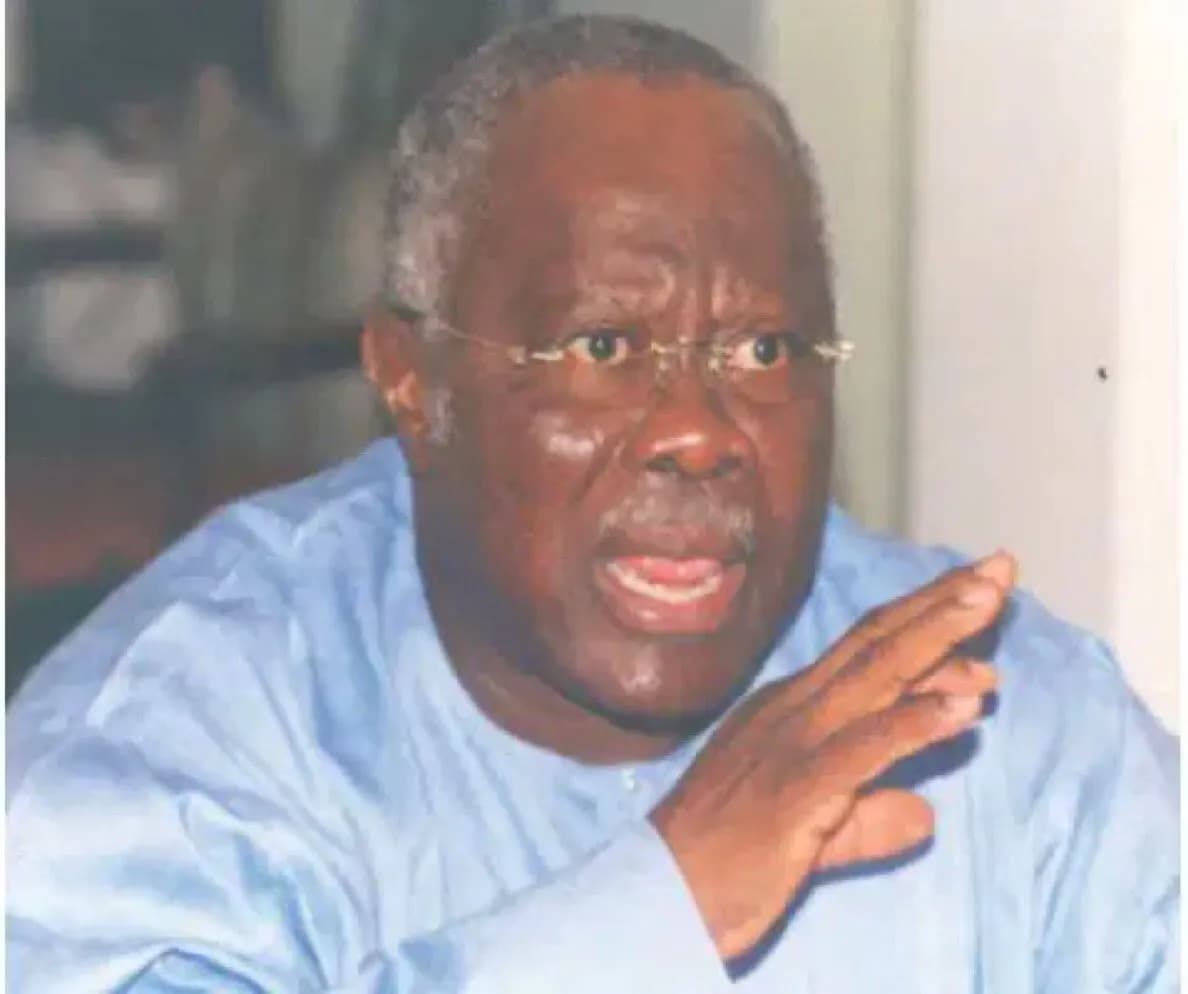
In the face of escalating economic challenges, Chief Bode George, a prominent politician and former Deputy National Chairman of the Peoples Democratic Party (PDP), has called on President Bola Ahmed Tinubu to slash the price of petrol to N300 per litre. George highlighted the economic strain caused by the removal of fuel subsidies and the subsequent increase in pump prices, which have significantly impacted the cost of living for Nigerians.
Rationale Behind the Call
George’s appeal aligns with the grievances of many Nigerians who argue that the current fuel price, exceeding N1000 per litre in most states, exacerbates inflation and hampers economic recovery. He emphasised that reducing the pump price would provide immediate relief to citizens struggling with skyrocketing transportation and commodity costs. Additionally, the elder states-man advocated for addressing corruption within the petroleum sector, which has long been accused of inefficiency and mismanagement.
Economic Implications
The call for a reduced fuel price comes amidst widespread debates about the sustainability of fuel subsidy removal and its effects on Nigeria’s economy. Critics of the subsidy removal argue that the transition has been poorly managed, leaving vulnerable populations to bear the brunt of the financial burden. George suggested that the government explore mechanisms to locally refine crude oil at affordable rates, especially with the Dangote Refinery now operational. This approach could reduce dependency on imported fuel, saving foreign exchange and stabilising pump prices.
Public Reactions and Government Response
Pockets of public protests and demands for economic reforms have intensified, with citizens urging the government to address the broader challenges of inflation, unemployment, and high electricity tariffs. While the Tinubu administration has introduced palliatives such as cash transfers and agricultural incentives, critics argue these measures are insufficient to mitigate the harsh realities faced by ordinary Nigerians.
Looking Ahead
Bode George’s plea underscores the urgent need for comprehensive economic strategies to address the root causes of Nigeria’s economic woes. Many observers believe that prioritising local refining capacity, implementing transparent governance in the oil sector, and reducing the cost of governance could pave the way for sustainable economic recovery.
The debate continues as Nigerians await further action from the Tinubu administration to balance economic reform with social welfare.