

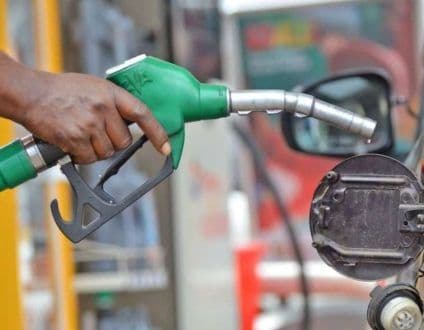
The Federal Government is moving to introduce a price-modulation mechanism that will place a proposed ceiling of ₦1,350 per litre on the ex-gantry or landing cost of petrol, in a fresh attempt to shield Nigerians from sharp swings in pump prices.
Minister of Finance and Coordinating Minister of the Economy, Taiwo Oyedele, disclosed this on Thursday in Abuja during a press briefing on petrol prices and subsidy-related issues.
Oyedele said the government was negotiating the ceiling with the aim of ensuring that petrol prices do not rise every time international crude prices or the naira exchange rate moves adversely.
“We are introducing price modulation. Pump prices should not have to follow every swing in global crude or exchange rate. The government is negotiating a ceiling of N1,350 a litre on the ex-gantry cost of petrol to keep pump prices stable,” he said.
Under the proposed arrangement, where the actual cost of petrol rises above the ₦1,350 ceiling, refiners and importers would absorb the difference and recover the shortfall later when crude prices or exchange rates become more favourable.
Oyedele stressed that the mechanism would neither amount to a return of petrol subsidy nor constitute price control.
“This is neither a subsidy nor a price control; it is designed to smooth prices over time, rather than suppressing them,” he said.
The minister said the objective was to replace sharp price swings with greater stability, arguing that consumers would benefit more from a relatively predictable price than from frequent increases followed by slower reductions.
The proposed ceiling would also be reviewed monthly, with adjustments made where necessary and the figures published, according to Oyedele.
As part of the broader plan to stabilise petrol prices, the government is also working on a forward crude sale arrangement for domestic refineries.
Oyedele said refiners could be offered crude at an agreed price for a defined period, giving them greater certainty over their operating costs and reducing their exposure to international market volatility.
Using a six-month period as an example, he said the government could sell crude to refiners at an agreed price of about $80 per barrel, allowing them to plan their budgets while providing more certainty for consumers.
The minister said rising domestic crude production and the release of previously committed crude would further support the strategy.
Oyedele also announced a 30-day discount on petrol sold through NNPC Limited stations, with public transporters to receive priority.
He maintained that the measure was not a subsidy, saying the government was effectively asking NNPC to sell the product at cost during the period.
The latest measures come amid renewed pressure on petrol prices after international crude prices pushed domestic refining and import costs higher in recent months.
Dangote Petroleum Refinery had raised its petrol gantry price to ₦1,350 per litre in September before subsequently reducing it to ₦1,325, while pump prices across several locations moved above ₦1,400 per litre during the period.
The Federal Government's latest proposal therefore seeks to prevent such international market and exchange-rate movements from translating directly into repeated shocks at the pump.
Oyedele acknowledged, however, that the measures would not completely eliminate the pressure facing households, but said the government's objective was to make fuel pricing more stable and predictable.
The proposed mechanism now hinges on the government's negotiations with refiners and importers and how the eventual ceiling and recovery framework will be implemented.