

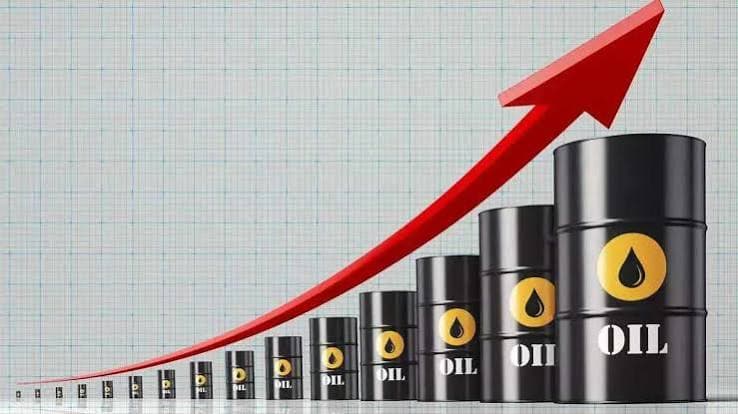
Brent crude has climbed above $100 per barrel, with renewed attacks involving oil infrastructure and vessels in the Middle East raising fresh concerns about the availability of crude and the security of international energy routes.
At 4:05 p.m. West Africa Time on Wednesday, Brent crude was trading at $101.20 per barrel, up $3.31, while West Texas Intermediate stood at $96.34, also gaining $3.31 or 3.56 per cent.
The latest surge represents a major recovery in crude prices after Brent had remained below the $100 threshold since July. Both benchmarks have now gained more than 60 percent since the beginning of 2026, while their advances this month have reached roughly 10 percent.
The escalation has been particularly significant around the Strait of Hormuz, where renewed military activity is raising the prospect of further restrictions on the movement of crude and petroleum products.
The United States Central Command said its forces had struck five Iranian crude-oil vessels, with four attacked in the Gulf of Oman and another near Kharg Island, a key Iranian oil-export centre.
The strikes followed what Washington said were attacks by Iran's Islamic Revolutionary Guard Corps on a US Navy warship using ballistic missiles.
Iran said it subsequently launched attacks against a US military facility in Jordan and several vessels and oil tankers that it accused of attempting to use an unsafe and prohibited section of the Strait of Hormuz.
The exchange has increased the risk premium attached to crude, particularly because any prolonged disruption around Hormuz could affect a major international channel for energy shipments.
Saudi Arabia is also facing renewed attacks on its energy infrastructure.
Yemen's Iran-backed Houthi rebels launched attacks on targets in Jazan, Najran, Abha and Khamis Mushait, according to reports. Saudi authorities said the attacks injured 73 people, while Saudi Aramco suspended operations at some refineries affected by the strikes.
The developments have added pressure to a market already facing concerns about lost refining capacity and disrupted petroleum-product flows.
Market analysts are now watching not only the availability of crude but also the consequences of sustained high energy costs for inflation.
Lukman Otunuga, head of market research at FXTM, said the move through $100 represented an important threshold for financial markets, while warning that an extended period of elevated crude prices could complicate monetary-policy decisions.
The timing is significant for the US economy, with August consumer-price data due on Friday. A renewed increase in energy costs could influence the inflation picture and the outlook for interest rates.
Investors have nevertheless reduced expectations of an immediate Federal Reserve rate increase. Fed-funds futures were pricing in a 39 percent probability of a 25-basis-point hike next week, compared with more than 60 per cent a week earlier, according to the CME FedWatch Tool.
The immediate implications extend beyond financial markets. Higher crude prices can increase the cost of producing, importing and replacing refined petroleum products, potentially putting additional pressure on petrol, diesel and other fuel prices in oil-importing economies.
Patrick Munnelly, a market strategist at Tickmill Group, said the latest security developments were increasing market concerns over the vulnerability of energy supplies and the possibility that higher energy costs could feed through to broader prices.
The central question for the oil market is now whether the latest escalation remains contained or develops into a prolonged disruption to crude production, refining or shipping.
A sustained interruption to Middle Eastern supply routes could keep Brent above the $100 mark for longer, while any easing of tensions and restoration of disrupted operations could reduce the premium currently being built into crude prices.