

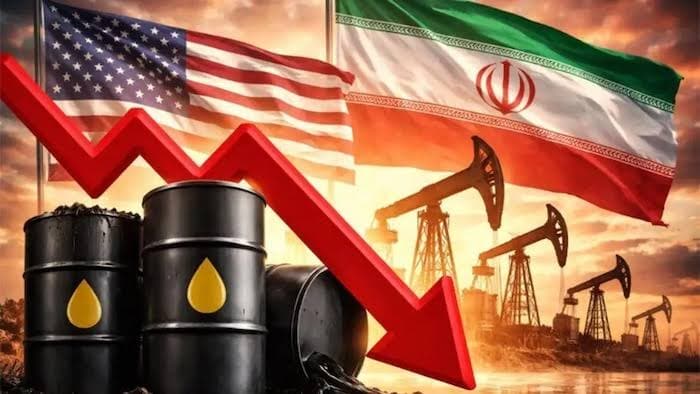
Brent crude fell below $100 per barrel on Wednesday as renewed diplomatic contacts between the United States and Iran at the United Nations General Assembly raised expectations of a possible resolution to the conflict and the eventual reopening of the Strait of Hormuz.
As at the time of writing 07:43 am (WAT), Brent crude was trading at $98.46 per barrel, down 0.80%, while West Texas Intermediate (WTI) stood at $89.32 per barrel, down 1.33%.
The decline came as investors responded to reports of prolonged US-Iran discussions through mediators in New York, with Washington and Tehran exploring conditions for ending hostilities and restoring shipping through the strategic waterway. Reuters reported that oil prices extended their losses on Wednesday as hopes for a diplomatic solution combined with improving Gulf supply prospects.
US Special Envoy Steve Witkoff said mediators had shuttled between the US and Iranian delegations during lengthy discussions on Tuesday, describing the exchanges as constructive and saying the mediation would continue. President Donald Trump separately described discussions involving US representatives and Iranian officials as productive and said he believed there was momentum towards an agreement.
For the oil market, the key issue is the potential restoration of flows through the Strait of Hormuz, a critical route for global crude and petroleum-product shipments. Iran has indicated that it could reopen the waterway within seven days if Washington eases military pressure and lifts its blockade of Iranian ports. Tehran transmitted its proposal through mediators on September 16.
The prospect of reopening Hormuz has introduced a fresh downside pressure on crude prices after weeks of elevated geopolitical risk. A sustained restoration of maritime traffic would improve the outlook for crude availability and reduce some of the supply-risk premium that has supported prices during the conflict.
Additional supply developments are also weighing on the market. Reuters reported that Saudi Arabia has begun restoring operations on its East-West pipeline to the Red Sea, creating another potential route for crude exports outside the Strait of Hormuz. The combination of improving supply prospects and diplomatic engagement has strengthened expectations of easing pressure on global oil flows.
However, the market remains sensitive to the outcome of the negotiations. Tehran continues to link the reopening of the strait to specific conditions, including an easing of US military pressure and the lifting of the blockade on Iranian ports. Until those conditions translate into an actual restoration of unrestricted shipping, the prospect of improved supply remains dependent on the progress of diplomacy.
The latest price movement therefore reflects more than a routine correction in crude futures, with traders increasingly pricing the possibility that diplomatic progress could reduce disruption around one of the world's most important oil-shipping corridors.