

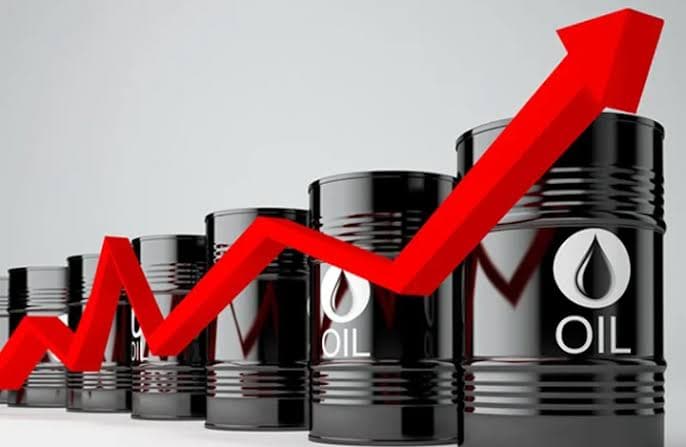
Brent crude oil moved closer to the critical $100 per barrel mark on Thursday, raising fresh concerns about a potential increase in petrol and diesel prices as a deepening global refining crisis tightens the supply of finished petroleum products.
As of 12:10 p.m. West Africa Time, Brent crude traded at $97.29 per barrel, gaining $1.66 or 1.74 percent. West Texas Intermediate (WTI) crude also climbed to $92.77 per barrel, up $1.76 or 1.93 percent.
The sharp rise in crude prices comes as disruptions to refinery operations in the Middle East and Russia threaten to keep the global market for petrol, diesel and other refined products under pressure well into 2027.
The growing pressure is no longer limited to crude supply. Analysts increasingly point to a shortage of available refining capacity as the bigger challenge facing the global petroleum market.
Attacks and conflict related damage to energy infrastructure in the Middle East have disrupted refinery operations and product deliveries from the region. At the same time, intensified attacks on Russian refining facilities have reduced the country's processing capacity and contributed to restrictions on diesel exports.
The combined disruptions have removed significant volumes of refined products from the international market, with other refining centres struggling to immediately replace the lost supply.
The International Energy Agency, in its August 2026 oil market assessment, said global refinery crude processing in July stood at 80.9 million barrels per day, nearly 5 million barrels per day below the level recorded a year earlier. The agency noted that available capacity elsewhere in the global refining system was unable to fully compensate for the emerging bottlenecks in petroleum product supply.
Industry executives have also warned that the return of damaged refineries could take considerable time, depending on the extent of the damage and the availability of equipment and spare parts.
This means that even where crude oil remains available, limited refining capacity could restrict the volume of petrol, diesel and other products reaching consumers. The situation is particularly significant for diesel, where supply pressures have indicated a much tighter market for middle distillates than crude prices alone may suggest.
For Nigeria, the approach of Brent crude towards $100 per barrel could further increase pressure on domestic fuel prices.
Although the country is a major crude producer and has expanded local refining capacity, petroleum prices remain closely linked to developments in international crude and product markets, exchange rate movements, logistics costs and the cost of replacing imported or internationally traded supply.
A sustained move by Brent above $100 per barrel could increase the cost of crude feedstock and refined petroleum products, potentially forcing marketers and refiners to adjust prices if higher costs persist.
The risk is heightened by the global refining squeeze, which could make finished fuel products more expensive even where crude supply remains relatively adequate.
With Brent now trading above $97 per barrel and global refining capacity under severe strain, the prospect of another round of fuel price adjustments is becoming increasingly difficult to ignore.
Unless crude prices retreat significantly or disrupted refining capacity returns faster than expected, motorists and consumers could face renewed pressure at the pumps as the global energy market enters another period of heightened volatility.