

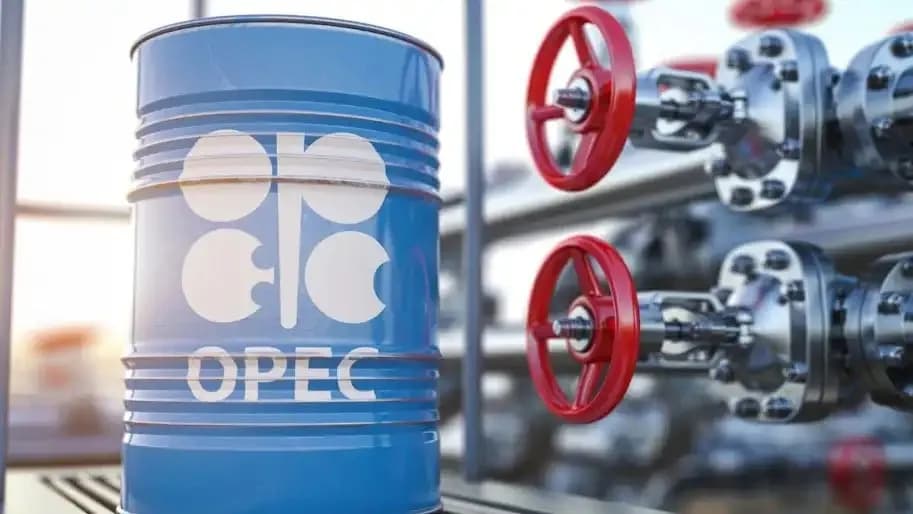
Global crude markets eased on Friday as traders positioned ahead of the OPEC+ virtual meeting on February 1, where the alliance is widely expected to maintain its current production levels into March. Brent crude briefly touched $70 per barrel earlier this week, its highest in five months, before settling at $69.32, down 0.39%, while WTI crude declined 0.32% to $65.21. Murban crude fell 0.44% to $69.91, indicating a broad-based softening across global crude benchmarks.
In contrast, natural gas prices surged 11.13% to $4.354, reflecting cold-weather demand and tightening supply conditions.
OPEC+ Maintains Output Pause Despite Price Gains
Delegates from the OPEC+ alliance told Reuters that the group will keep production flat in March, extending the pause first agreed in November 2025. This decision has been reaffirmed at meetings in December and January, with no indication of changes for the first quarter, typically the weakest season for global oil demand.
Eight OPEC+ members Saudi Arabia, Russia, Iraq, UAE, Kuwait, Kazakhstan, Algeria, and Oman have maintained coordinated cuts since 2023 to stabilise the market. According to Bloomberg, the group does not anticipate adjusting policy despite oversupply concerns and geopolitical uncertainties affecting production from Iran, Venezuela, and Russia.
Analysts note that the decision to maintain output is likely aimed at market stability rather than pushing prices higher, signalling that OPEC+ is managing supply cautiously amid demand uncertainties.
Geopolitics and Sanctions Continue to Influence Supply
Ongoing geopolitical developments continue to shape market sentiment. U.S. sanctions on top Russian producers, Rosneft and Lukoil, alongside the EU ban on oil products refined from Russian crude, have created uncertainty over the flow of Russian barrels. Meanwhile, Venezuela’s evolving oil policy and Iran-related tensions remain factors that could influence supply in the medium term.
Despite these risks, delegates suggest the group will monitor developments and adjust only if necessary, prioritising long-term market balance over immediate price movements.
Natural Gas Diverges Amid Oil Price Stability
While crude prices softened, natural gas surged due to winter heating demand and short-term supply disruptions. This divergence underscores the current decoupling between oil and gas markets, with oil governed by OPEC+ discipline and demand trends, and gas responding to immediate seasonal factors.
As traders await confirmation from OPEC+ on Sunday, crude is consolidating just below the $70 mark, reflecting a market balanced between production restraint and external supply risks.