

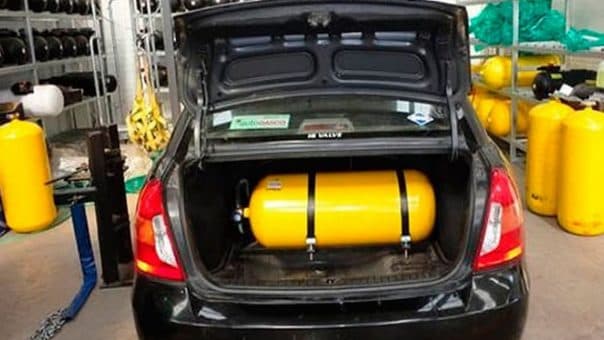
Nigeria’s shift to compressed natural gas (CNG) has reduced fuel costs for some commercial transport operators, but the savings have yet to translate into cheaper fares for many commuters across the country.
The Federal Government introduced the CNG initiative after the removal of petrol subsidy, positioning cheaper and cleaner natural gas as a major tool for reducing transportation costs. However, commuters in Abuja and other parts of the country continue to report high fares despite growing adoption of CNG-powered and converted vehicles.
An Abuja commercial driver, Markus Bilia, who spent ₦650,000 converting his vehicle, said CNG was more profitable than petrol but access to the fuel remained a major challenge. “For example, NIPCO is the only CNG station around here [along Kaduna Road, Abuja] but they don’t sell for 24 hours,” he said. He added, “If you are using CNG and want to embark on a very long journey, you still have to buy petrol.”
Another Abuja taxi driver, Mr Bulus, said the low cost of CNG had significantly reduced his fuel expenses. “CNG is cheap. Depending on where you buy, it’s only N400 per Standard Cubic Metre (SCM), so with just N5,000 worth of CNG, I will be able to work for two days. The problem is getting the product,” he said.
For commuters, however, the lower fuel cost has not produced the expected relief. An Abuja commuter, Emmanuel, said, “Most times, when they tell us that CNG is cheaper, I ask myself where the savings are going because what I pay for transport has not reduced.” Another commuter, Blessing, said operators continue to cite expenses such as spare parts, maintenance and tyres when explaining fares. “But from the passenger’s point of view, everything is still expensive,” she said.
The Federal Government says more than 90 CNG refuelling stations have been established across 23 states, while the Presidential Initiative on CNG and Electric Vehicles says more than 120,000 vehicles have been converted. The initiative has also attracted more than $2.5 billion in investment, according to the programme.
President Bola Tinubu has repeatedly said the benefits of cheaper CNG should reach commuters, while the government has continued to expand conversion and refuelling infrastructure. In March, he directed the deployment of 100,000 additional conversion kits nationwide as part of efforts to cushion the impact of high petrol prices.
However, transport operators say fuel is only one component of their operating costs. Vehicle maintenance, tyres, insurance, financing, driver allowances, road-related charges and limited access to CNG can all affect fares. For long-distance operators, inadequate refuelling infrastructure can also force drivers to retain petrol as a backup, limiting the immediate savings from switching to CNG.