

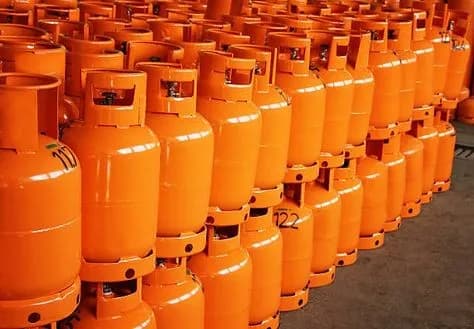
Nigeria’s domestic liquefied petroleum gas (LPG) market has come under pressure in recent weeks, as consumers across parts of the country grapple with rising prices and irregular supply. Analysts say the situation is not nationwide, but the ripple effects of multiple disruptions — from Dangote’s temporary shutdown to importers’ hesitation and the PENGASSAN strike — have combined to unsettle the market.
Dangote Refinery’s Temporary Supply Halt for Maintenance
The National President of the National Association of Liquefied Petroleum Gas Marketers, Olatunbosun Oladapo, confirmed that the scarcity was not uniform nationwide but largely limited to the South-West.
“The scarcity is not nationwide. Gas is available in the South-South and East, but the South-West experienced shortages due to recent disruptions. Maintenance was carried out at Dangote, and immediately after that, PENGASSAN embarked on strike, which delayed vessels carrying gas from NLNG. Now that terminals have resumed trucking, the backlog will take two to three days to clear,” Oladapo explained.
He added that Dangote had already resumed product lifting and started issuing pro forma invoices to off-takers — a move expected to stabilise supply in the coming days.
Industry observers note that even short-term disruptions from the 650,000-barrel-per-day refinery can shake the market, given its growing dominance in domestic LPG supply. The temporary pause, though necessary for plant integrity, created a ripple that pushed demand pressure on other suppliers.
Importers Retreat amid Dangote’s Competitive Pricing
A second key factor behind the current scarcity lies with importers who have pulled back due to price competition. As revealed in a separate industry insight, most private importers have found it increasingly difficult to compete with Dangote’s relatively, as of Wednesday, Dangote was selling LPG at ₦810 per kilogram, while other depots, including Ardova and Nipco, priced the product at ₦910–₦920 per kg, a margin of ₦100 per kg. Oil and gas expert Olatide Jeremiah explained that the three-week break in Dangote’s supply created a market vacuum that importers failed to fill.
“Dangote only resumed selling on Wednesday, after being out of the market for about three weeks. Importers also stayed away, claiming it was difficult to compete with Dangote’s lower pricing. This created a supply vacuum. Scarcity always comes with a price hike, and retailers took advantage,” said Jeremiah, Chief Executive Officer of Petroleumprice.ng.
The development underscores the refining giant’s growing market influence. Many independent importers now see limited profit margins in bringing in LPG from international markets, especially when domestic players can offer cheaper alternatives without the burden of forex fluctuations or shipping costs.
Recent PENGASSAN Strike Disrupting Supply Chains
The third blow came from the recent industrial action by the Petroleum and Natural Gas Senior Staff Association of Nigeria (PENGASSAN), which further tightened the supply chain. The strike, which coincided with the refinery’s maintenance period, delayed cargo movements and slowed down product trucking from terminals.
The combined effect of halted refinery output, importers’ retreat, and labour disruptions strained the flow of LPG into the South-West, sparking pockets of scarcity and price volatility.
Outlook: Relief on the Horizon
With Dangote’s facility back online and PENGASSAN calling off its strike, marketers expect gradual normalisation of supply within the week. However, experts warn that without consistent coordination between domestic refiners, importers, and labour unions, such disruptions could reoccur — putting further strain on households already battling inflationary pressures.