

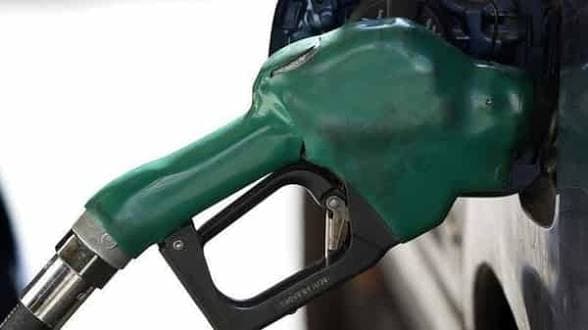
The Nigerian Midstream and Downstream Petroleum Regulatory Authority (NMDPRA) has attributed persistent volatility in petrol prices to rising crude oil sourcing costs, domestic refining constraints, logistics and transportation expenses under the country’s deregulated downstream petroleum market.
The Authority’s Head of Public Affairs, George Ene-Ita, disclosed this in Abuja on Sunday in an interview with the News Agency of Nigeria (NAN), explaining that the cost of crude used as refinery feedstock and the time between procurement and delivery are incorporated into the final price of petroleum products.
Ene-Ita said the pricing pressure was compounded by Nigeria’s reliance on single-source domestic refining, as well as the time lag involved in importing PMS cargoes and moving products from ports to inland markets.
“This issue is knotty in the sense that there are various factors involved.
“Pump price of petrol has been completely deregulated. And if this is the case, it also means that all volatilities associated with supply have to be factored in.
“These factors include single-source domestic refining, sourcing of crude oil as feedstock, time lag between when crude is sourced offshore and when it eventually arrives at the refinery.
“They also include time lag between when PMS cargoes are ordered and when they eventually arrive our ports for subsequent inland distribution and supply in the case of imported fuel.
“There are also transportation and landing costs, as well as marine and inland taxes.”
He added that refinery pricing templates and ex-depot prices were not regulated under the current framework, although NMDPRA was working with relevant agencies, including the Federal Competition and Consumer Protection Commission, to promote price equilibrium and parity at the last mile.
The explanation comes as Brent heads towards $100 per barrel amid renewed geopolitical tensions in the Middle East, while petrol prices in the Federal Capital Territory have risen to between ₦1,299 and ₦1,350 per litre and between ₦1245 to ₦1230 in Lagos following recent increases in refinery gantry prices.
The development has also renewed calls for intervention in the pricing of crude supplied to domestic refineries. President of the Independent Petroleum Marketers Association of Nigeria, Maigandi Garima, said high international crude prices were increasing refiners’ production costs and ultimately putting additional pressure on consumers.
Garima urged the Federal Government to consider measures that would reduce the cost of crude supplied to domestic refineries during periods of international price volatility, arguing that such support would not amount to a return to fuel subsidy.
“What we are saying is that if Nigerians can make this huge investment, we should support them. Government can intervene by reducing the cost of crude oil to the refinery.
“When the refinery refines the product at a lower cost, it can also reduce the price for Nigerians, and this will help the economy,” he said.
Ene-Ita said a more robust, competitive and sustainable domestic refining ecosystem would ultimately make petroleum pricing clearer, while Garima called for a predictable crude supply and pricing framework to enable local refineries to plan production and reduce frequent fluctuations in pump prices.This version keeps the regulatory explanation at the centre, while making the crude-cost issue, deregulation, refinery supply structure and logistics costs clear enough for both industry readers and ordinary Nigerian motorists.