

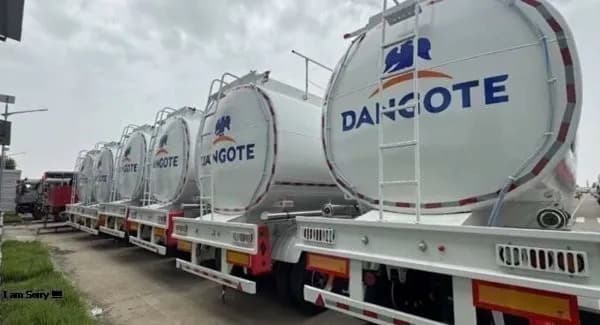
Dangote Refinery began loading its branded trucks today, Petroleumprice.ng correspondents confirmed, setting the stage for the official rollout of its free fuel distribution scheme.
This morning, the refinery rolled more than 1,000 Compressed Natural Gas (CNG)-powered trucks into its gantry for loading. After that step, distribution will begin across 12 states: Lagos, Ogun, Oyo, Osun, Ondo, Ekiti, Kwara, Edo, Delta, Rivers, the Federal Capital Territory (Abuja), and Kogi.
From Monday, retail pump prices will drop. Lagos and the South-West will sell petrol at ₦841 per litre, while Abuja, Edo, Kwara, Rivers, and Delta will record ₦851 per litre.
Dangote Expands Fleet Despite CNG Price Surge
According to Group spokesman Anthony Chiejina, the programme faced delays in August due to logistics in China. However, he stressed that with trucks now loaded, distribution is ready to begin.
Meanwhile, the refinery continues to receive new trucks weekly. The rollout forms part of a larger plan to deploy 10,000 CNG-powered trucks. Despite recent CNG price hikes, Dangote insists the new fleet will cut costs, improve logistics, and expand nationwide reach.
Marketers Welcome Rollout, Rivals Push Back
The Independent Petroleum Marketers Association of Nigeria (IPMAN) welcomed the scheme. Its president, Abubakar Shettima, said many members had already registered. “We are waiting for the trucks. This price cut will ease pressure on consumers, and that is our focus,” he noted.
In contrast, the Depot and Petroleum Products Marketers Association of Nigeria (DAPPMAN) condemned the initiative. It alleged that Dangote sells at lower rates to international traders than to Nigerian buyers. The refinery rejected the claims, insisting the programme will proceed.
Backed by an estimated ₦720bn investment, the scheme aims to benefit over 42 million small businesses. It will also revive dormant filling stations and create thousands of jobs across the transport and retail chains.
By completing the truck-loading phase before distribution, Dangote has taken a decisive step. Analysts believe the move could reshape Nigeria’s fuel supply dynamics in the weeks ahead.