

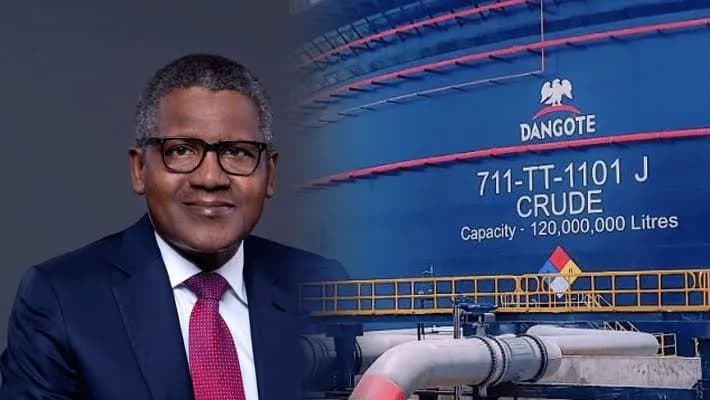
Dangote Refinery has reduced its petrol price to ₦825 per litre, according to an inside source, intensifying competition with private depots and fuel importers. The cut aims to tighten the refinery’s hold on Nigeria’s downstream market, where pricing battles now define dynamics. As of Saturday, Petroleumprice.ng listed Dangote’s retail market price at ₦830 per litre, reflecting a tactical decline.
This pricing strategy undercuts depot owners and importers still weighed down by forex volatility and high landing charges.
Crude Oil No Longer Drives Local Fuel Prices
Global crude prices no longer set Nigeria’s fuel rates. Local market forces, especially the rivalry between Dangote and private depot owners, now determine pricing. These players are locked in a high-stakes battle for market dominance.
Dangote’s Price Strategy Alters Market Behavior
With control over more than 50% of Nigeria’s fuel market, Dangote recently dropped its petrol price to ₦825 per litre. While the refinery hasn’t officially announced this, sources say it offers flexible deals to its bulk marketers, who now resell at ₦830 or slightly lower.
This approach helps Dangote stay ahead of depot owners facing higher overheads. For example:
- Menj sells at ₦837/litre
- MRS Tincan at ₦836/litre
- Swift at ₦835/litre
Dangote’s model has closed the price gap by ₦10 to ₦15, applying significant pressure on competitors.
Price War Reshapes Nigeria’s Fuel Economy
Nigeria’s fuel market is undergoing a transformation. Crude prices play a minimal role, while local strategies now dominate.
Dangote’s growing market share stems from aggressive pricing and operational efficiency. Although consumers benefit in the short term, long-term effects may alter the country’s fuel supply landscape. As the price war continues, Dangote’s influence will likely expand, further straining smaller players.