

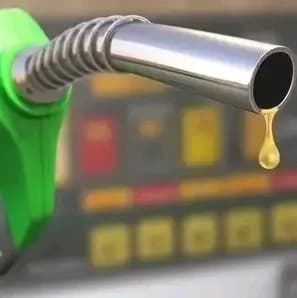
The Dangote Petroleum Refinery has announced a new gantry price of ₦820 per litre for Premium Motor Spirit (PMS), commonly known as petrol, as it begins direct supply to retail outlets across Nigeria. Effective Monday, September 15, 2025, the initiative is poised to reshape the country’s downstream petroleum landscape by offering free delivery to petrol station owners nationwide.
This development, which comes amid industry calls for improved supply efficiency and reduced landing costs, positions Dangote Refinery as a central player in stabilising pump prices and eliminating layers of middlemen within the value chain.
Retail Pump Price Across States
The refinery disclosed that the retail pump price has been set at ₦841 per litre in states such as Lagos, Ogun, Oyo, Ondo, Osun, and Ekiti, while cities including Abuja, Delta, Rivers, Edo, and Kwara will sell at ₦851 per litre.
By introducing these benchmark figures, Dangote aims to harmonise pricing in strategic markets, balancing logistics costs with supply chain efficiency. The move also underscores the company’s bid to expand gradually into other states after consolidating operations in key demand hubs.
Disrupting the Traditional Supply Chain
Analysts argue that the direct-to-station distribution model with free delivery could transform downstream operations. Traditionally, marketers relied heavily on third-party depots and bridging from coastal terminals to inland states, leading to inflated costs. By bypassing intermediaries, Dangote Refinery reduces bottlenecks and ensures consistent product flow.
Furthermore, the free delivery offer serves as an incentive to independent marketers who often grapple with high transportation expenses. This could trigger a new wave of competition, forcing other suppliers to adjust strategies in order to remain relevant in an increasingly deregulated environment.
Industry Impact and Market Confidence
Industry stakeholders suggest that this pricing structure could improve supply predictability and market stability at a time when volatility in global oil markets continues to pressure Nigeria’s downstream sector. The refinery’s capacity to refine locally and distribute directly provides a hedge against excessive importation costs and forex fluctuations.
With Nigeria’s daily petrol consumption hovering around 50–60 million litres, the Dangote Refinery’s intervention is not only timely but also strategic in restoring confidence among petrol station operators and consumers alike.
Expanding Horizons
The company noted that the rollout will begin with selected states but will gradually expand to cover all 36 states and the Federal Capital Territory. This phased strategy allows for logistics fine-tuning while addressing supply gaps.
For marketers, the registration process opens a door to reliable supply, cost savings, and improved margins. For consumers, it could signal the beginning of more stable pump prices, reduced queues, and fewer distribution shocks.
Dangote Refinery’s bold step in fixing the PMS gantry price at ₦820 per litre and offering free nationwide delivery has raised optimism in Nigeria’s downstream sector. If sustained, the model could redefine petroleum retailing, cut down operational inefficiencies, and strengthen Nigeria’s march towards energy self-sufficiency.