

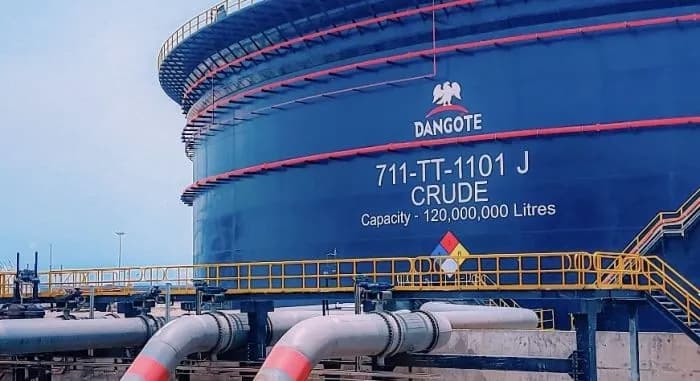
Dangote Petroleum Refinery and Petrochemicals FZE (DPRP) has suspended all self-collection gantry sales with immediate effect. The company redirected marketers to its structured delivery scheme to streamline supply.
Shift to Delivery Scheme
In a notice to marketers on Thursday, September 18, 2025, Dangote ordered an immediate stop to payments tied to active Pro Forma Invoices (PFIs) for gantry collections. It warned that any payments made after the effective date would be rejected.
Dangote explained that the move was an operational adjustment aimed at improving efficiency. The company urged marketers to adopt its Free Delivery Scheme, which provides direct shipments to retail outlets.
“We apologise for any inconvenience. This adjustment will help us serve you better,” the refinery said.
To reassure marketers, Dangote noted that it holds a consistent closing stock of 500 million litres of refined products every month. It encouraged both new and existing customers to register for the delivery scheme to avoid supply disruptions.
Background Dispute With Marketers
The suspension comes amid growing friction between the refinery and depot operators. Earlier this week, Dangote rejected a demand by the Depot and Petroleum Products Marketers Association of Nigeria (DAPPMAN) for ₦1.505 trillion in subsidies to cover coastal delivery costs. The refinery insisted that marketers could either lift products directly from its gantry or use its structured supply options.
Market Impact
Dangote also aligned its operations with the Federal Government’s reform agenda under President Bola Tinubu. It said its strategy is to stabilise the naira, cushion the impact of subsidy removal, and strengthen Nigeria’s refining capacity.
Analysts believe that halting gantry sales and prioritising direct retail delivery gives the refinery tighter control of distribution. They argue that this approach could reshape competition and improve efficiency in the downstream petroleum market.