

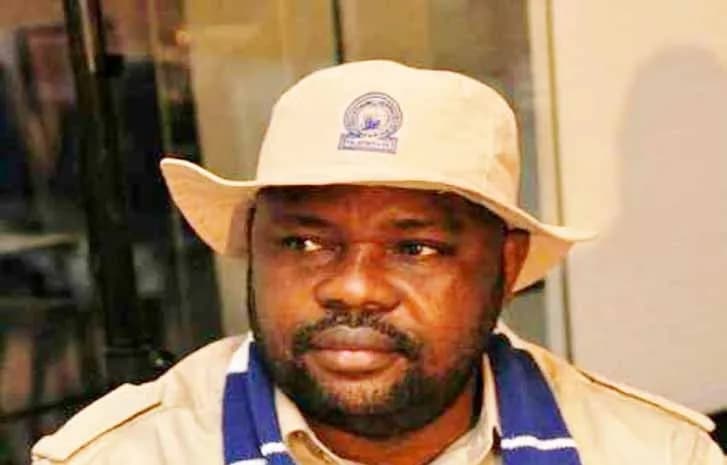
The National President of the Nigeria Union of Petroleum and Natural Gas Workers (NUPENG), Williams Akporeha, has warned that Aliko Dangote’s multi-billion-dollar refinery project will not succeed unless it respects Nigeria’s labour laws and established union structures. Speaking during an interview on Arise Television, Akporeha declared that the union’s strike would continue following the collapse of reconciliation talks with the Dangote Refinery management.
A Clash Over Union Rights
At the centre of the dispute is the unionisation of petroleum tanker drivers working with the refinery’s fleet of about 4,000 trucks. According to NUPENG, the refinery’s management allegedly attempted to bypass recognised industry unions such as NUPENG and PENGASSAN by creating an alternative drivers’ association.
Akporeha condemned the move as illegal and a direct attack on workers’ rights, describing it as a dangerous precedent that could undermine decades of collective bargaining in the oil and gas industry. “No employer has the right to enslave workers. Everybody wants Dangote to succeed, but he must play by the rules,” he said.
The Strike and Its Immediate Fallout
The strike, which began on Monday, has already paralysed operations at major petroleum depots across Lagos, Warri, and Port Harcourt. Tanker drivers parked their trucks, forcing several filling stations to shut down. NUPENG members closed the Aradel Refinery in Obele, Port Harcourt, and the Kwale Hydrocarbon facility in Delta State to enforce compliance.
Analysts warn that if the strike lingers, Nigeria could face widespread fuel scarcity, pushing up transport costs, fuelling inflation, and disrupting economic activities nationwide. For a country already battling high living costs, the implications could be dire.
Dangote’s Refinery: Promise Meets Industrial Reality
The Dangote Refinery, with a capacity of 650,000 barrels per day, has been projected as the game-changer that would end Nigeria’s dependence on imported refined products. However, this labour dispute has exposed the fragility of its human resource strategy. By allegedly resisting unionisation, the refinery risks alienating the very workforce that drives its distribution network.
Labour experts argue that industrial peace is as critical as technology and feedstock in ensuring sustainable refining operations. Without cooperation between management and unions, the refinery’s promise of transforming Nigeria’s downstream sector could be undermined.
Federal Government’s Delicate Balancing Act
The Federal Government, through the Minister of Labour and Employment, Muhammad Dingyadi, attempted to mediate between both parties, but the meeting ended in a stalemate after Dangote’s representative, Sayyu Dantata, reportedly walked out.
The government now faces a complex balancing act: protecting investor confidence in the Dangote project while upholding the sanctity of Nigeria’s labour laws. Observers believe the situation requires structured dialogue, with all parties willing to compromise in the national interest.
A Test Case for Nigeria’s Energy Future
This standoff is more than a union-management disagreement it is a test of Nigeria’s ability to balance massive private investment with the protection of workers’ rights. As the country pushes its “Decade of Gas” agenda and energy transition goals, the Dangote dispute illustrates that industrial democracy must form the foundation of economic transformation.
Akporeha was clear in his message: For Dangote’s refinery to succeed and truly become a national asset, it must embrace union recognition, fair labour practices, and respect for the rule of law.