

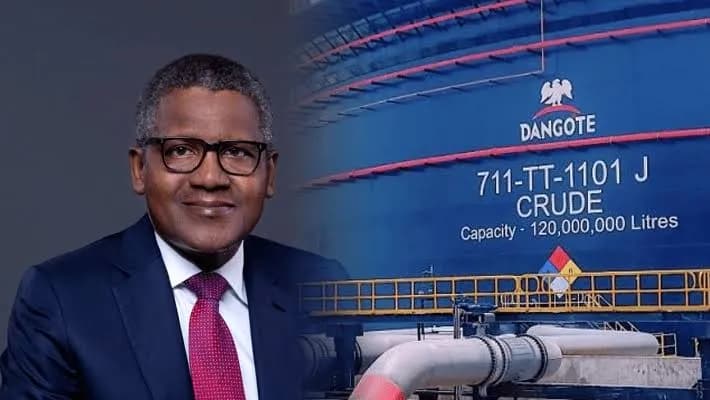
Nigeria’s gas-to-industry ambition gained fresh momentum at the weekend as Dangote Industries Limited (DIL) and the Nigerian National Petroleum Company Limited (NNPCL) sealed an expanded gas supply agreement designed to fuel large-scale industrial growth, energy transition and production expansion.
The agreement, signed in Abuja during the unveiling of the NNPCL Gas Master Plan 2026, strengthens gas supply commitments to three strategic Dangote subsidiaries Dangote Petroleum Refinery, Dangote Fertiliser Plant and Dangote Cement Plc positioning natural gas as the backbone of their expansion drive.
Industry analysts say the deal signals a shift from episodic gas contracting to long-term, bankable supply frameworks critical for Nigeria’s industrialisation push.
Scaling gas supply for heavy industry
Under the enhanced Gas Sales and Purchase Agreements (GSPAs), two NNPC subsidiaries Nigerian Gas Marketing Limited and NNPC Gas Infrastructure Company Limited (NGIC) will deliver increased gas volumes to support the growing energy needs of Dangote’s industrial assets.
Managing Director of Dangote Petroleum Refinery, Mr. David Bird, described the agreement as a strategic move to lock in reliable energy supply ahead of rising production capacity.
“This marks a critical milestone in our expansion journey,” Bird said. “It demonstrates deliberate planning to secure the energy backbone required to scale output efficiently and sustainably.”
Group Managing Director of Dangote Cement Plc, Mr. Arvid Pathak, noted that the agreement directly supports the company’s drive towards cleaner energy adoption, particularly compressed natural gas (CNG) for logistics and production.
According to him, dependable gas supply will enable higher output while lowering carbon intensity across operations.
Gas as catalyst for cleaner energy transition
Dangote Fertiliser FZE also confirmed that the agreement would underpin its fertiliser expansion projects, noting that natural gas remains the primary feedstock for fertiliser production.
Minister of State for Petroleum Resources (Gas), Rt. Hon. Ekperikpe Ekpo, said the Gas Master Plan represents a decisive move from policy rhetoric to execution.
“Nigeria is fundamentally a gas nation,” Ekpo said. “Our challenge has never been resources, but translation translating gas into value, infrastructure into growth, and policy into measurable outcomes.”
He added that the plan aligns fully with the Federal Government’s Decade of Gas Initiative, positioning gas as the anchor for energy security, industrial development and a just energy transition.
NNPCL targets global gas competitiveness
Group Chief Executive Officer of NNPCL, Mr. Bashir Ojulari, described the Gas Master Plan 2026 as an execution-driven roadmap to unlock Nigeria’s vast gas reserves.
With about 210 trillion cubic feet (Tcf) of proven gas reserves and potential upside of up to 600 Tcf, Ojulari said Nigeria holds one of the world’s most significant hydrocarbon basins.
“The plan is structured to exceed the presidential mandate of raising gas production to 10 billion cubic feet per day by 2027 and 12 billion cubic feet per day by 2030,” he said.
He explained that the strategy prioritises cost efficiency, reserve maturation from 3P to bankable 2P, and expanded gas supply to power generation, CNG, LPG, mini-LNG and industrial off-takers.
Ojulari reaffirmed NNPCL’s commitment to a collaborative, investor-focused approach, noting that partnerships such as the Dangote deal are central to turning Nigeria into a globally competitive gas hub.