

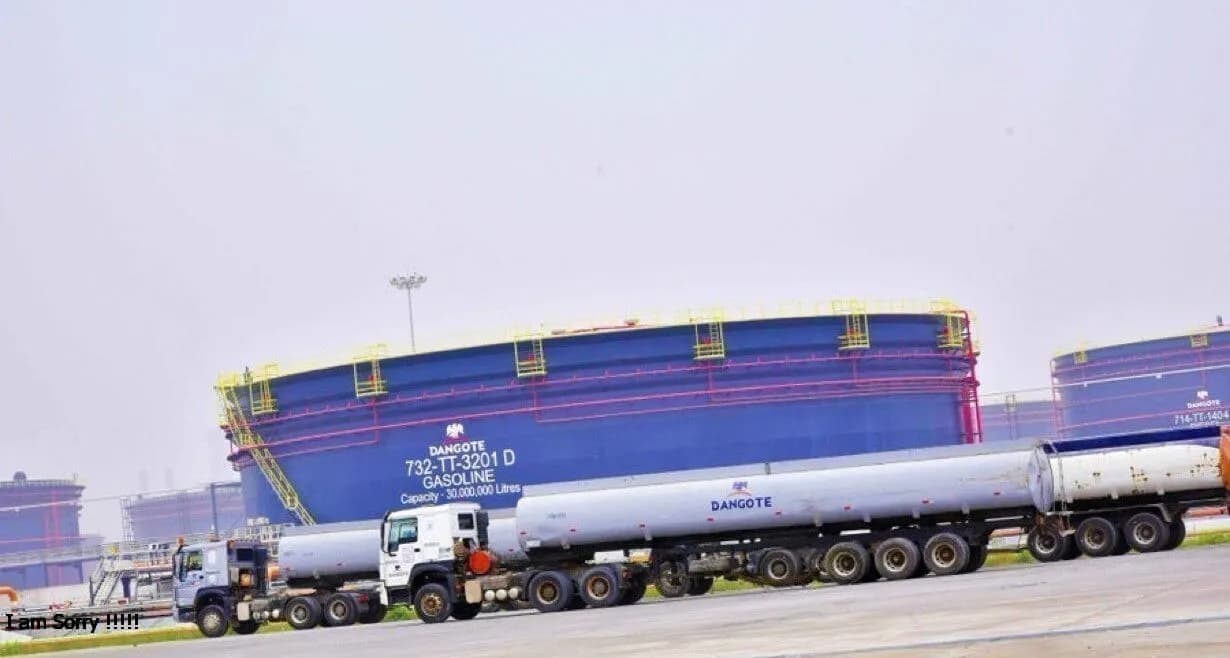
The Federal Government on Monday intensified efforts to prevent a nationwide shutdown in the petroleum sector as tensions escalated between the Dangote Group and the Nigeria Union of Petroleum and Natural Gas Workers (NUPENG).
The dispute, now drawing in the Petroleum Products Retail Outlets Owners Association of Nigeria (PETROAN), underscores growing fears that the Dangote Refinery’s expanding dominance could destabilise existing operators, disrupt retail networks, and trigger industrial unrest.
Dispute Over Monopolistic Moves
At the heart of the crisis is Dangote Refinery’s decision to stretch its reach across refining, storage, logistics, and retail. Industry operators allege that this strategy threatens the survival of independent players who have built the downstream sector over decades.
NUPENG has accused the company of anti-union practices by allegedly barring drivers of imported compressed natural gas (CNG) trucks from joining unions. The union argues that such restrictions breach Section 40 of the Nigerian Constitution, the Labour Act, and International Labour Organisation conventions on freedom of association.
Warning Strike and Labour’s Red Alert
The Petroleum Products Retail Outlets Owners Association (PETROAN) warned that its members could shut down dispensing operations nationwide if the impasse persists. The group announced plans for a three-day suspension of lifting and retailing products beginning Tuesday, September 9, if negotiations collapse.
Confirming the escalation, NUPENG issued a red alert to the Nigeria Labour Congress, describing Dangote’s actions as “modern slavery” and threatening a broader strike that could choke the petroleum supply chain.
PETROAN President, Billy Gillis-Harry, explained on Channels Television that the issue was not about fighting Dangote but about ensuring fairness in a sector that depends on multiple stakeholders, including major marketers, depot operators, transporters, and unions.
“We want the Dangote Refinery to succeed, but success should not come at the expense of competition and workers’ rights,” he said.
Federal Government’s Conciliation Efforts
Minister of Labour and Employment, Muhammad Maigari Dingyadi, convened a tripartite conciliation meeting on Monday, rescheduling it from 3 p.m. to 10 a.m. However, the session stalled as NUPENG leaders were still travelling to Abuja from Lagos.
Speaking after the delay, ministry officials said the intervention was aimed at avoiding disruptions in petroleum supply and maintaining stability in the fragile economy. Dingyadi appealed to unions to shelve strike plans while negotiations continue, warning that industrial action could worsen inflation and insecurity.
Industry Implications
Analysts note that Dangote Refinery’s vertical integration could reshape Nigeria’s downstream petroleum sector. While the 650,000 barrels per day facility promises to boost local refining capacity, labour experts argue that unchecked dominance could marginalise independent marketers, distort pricing, and weaken collective bargaining structures.
The refinery imported thousands of CNG-powered trucks for direct distribution, sparking fears it may bypass established distribution networks a move PETROAN insists must fit within an industry-wide framework.
What Lies Ahead
The coming days will be crucial in determining whether dialogue prevails or whether Nigerians face another round of fuel scarcity. Industry stakeholders insist that the solution lies in a transparent roundtable where roles of all players are clearly defined.
For now, the ball is in the Federal Government’s court. Failure to broker peace could see filling stations locked, tankers grounded, and the economy battling a fresh wave of shocks from the petroleum supply chain.