

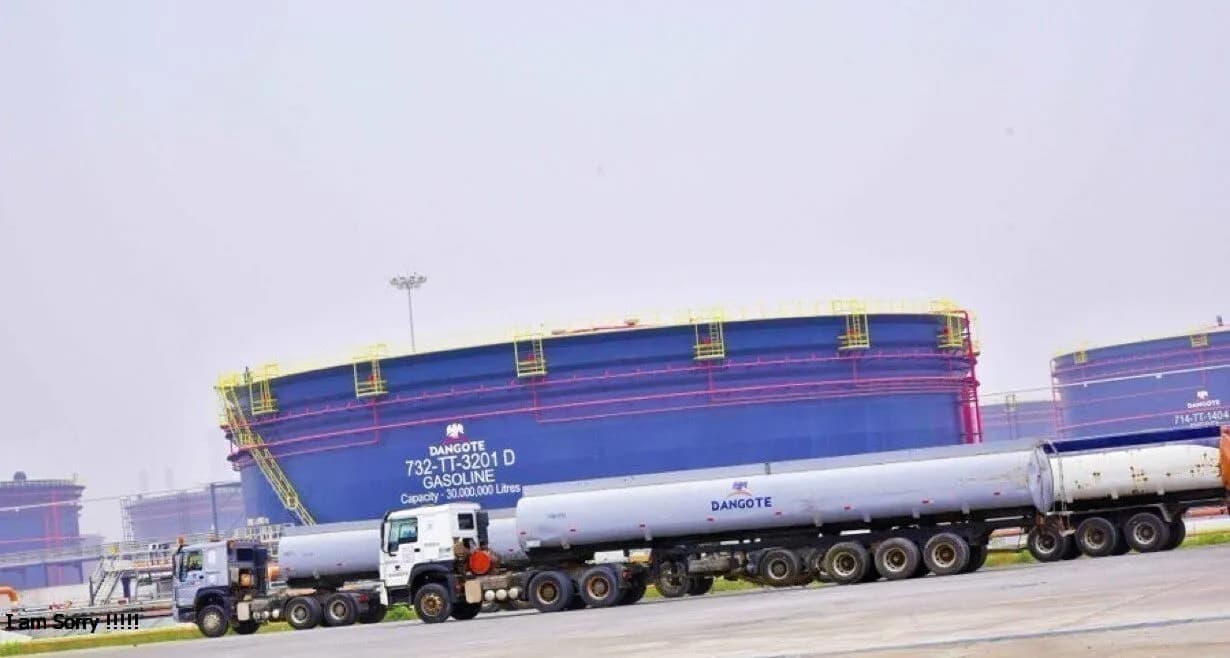
The much-anticipated reconciliatory meeting between the Federal Government, Dangote Refinery, and the National Union of Petroleum and Natural Gas Workers (NUPENG) ended without resolution on Monday night, leaving the threat of nationwide fuel scarcity hanging over Nigerians.
A Seven-Hour Deadlock
Convened by the Ministry of Labour and Employment, the Abuja meeting brought together senior officials of the Nigeria Labour Congress (NLC), Trade Union Congress (TUC), Nigerian Midstream and Downstream Petroleum Regulatory Authority (NMDPRA), Dangote Group, and MRS Petroleum. Despite lasting nearly seven hours, discussions collapsed after representatives of the Dangote Refinery reportedly staged a walkout.
NLC spokesperson Benson Upah told journalists, “There was no agreement. Even after we bent backwards to accommodate their rigid stance, the Dangote team walked out on the ministers and organised labour. We are left with no choice but to continue with our action.”
The Core Dispute: Jobs and Union Rights
At the centre of the crisis is Dangote Refinery’s plan to import 4,000 Compressed Natural Gas (CNG) trucks for direct fuel distribution. NUPENG insists the move sidelines its Petroleum Tanker Drivers (PTD) branch, threatening thousands of jobs.
The union accuses Dangote and MRS Petroleum of recruiting new drivers under conditions that bar them from joining any oil and gas union, a practice it describes as anti-labour and unconstitutional. The Petroleum Tanker Drivers argue this exclusion undermines collective bargaining rights and breaches international labour conventions to which Nigeria is a signatory.
Wider Implications for the Oil Market
Industry watchers warn that the standoff could destabilise Nigeria’s fragile downstream petroleum sector. With NUPENG already shutting depots nationwide, supply disruptions may trigger fresh queues at filling stations and push pump prices higher.
Dangote Refinery, seen as a game-changer for Nigeria’s energy independence, faces its toughest labour test since beginning operations. Analysts note that while the refinery’s CNG truck project aligns with the government’s ‘Decade of Gas’ policy, failure to integrate existing tanker drivers risks sparking prolonged unrest.
Government Intervention Falters
Labour Minister Muhammad Dingyadi, who co-chaired the talks with Minister of State Nkeiru Onyejeocha, had hoped to broker peace. However, sources confirmed disagreements over draft resolutions prevented parties from signing a Memorandum of Understanding.
With negotiations stalled, all eyes are now on the Federal Government’s next move. If NUPENG’s strike proceeds, fuel loading nationwide could grind to a halt, worsening inflationary pressures already straining households and businesses.
What Next?
The dispute underscores the tension between Nigeria’s push for energy transition and the protection of existing labour structures. While Dangote pushes efficiency through CNG logistics, NUPENG views the plan as a direct threat to its members’ survival.
Unless urgent compromises are reached, Nigerians may once again face the all-too-familiar cycle of fuel queues, hoarding, and black-market sales.