

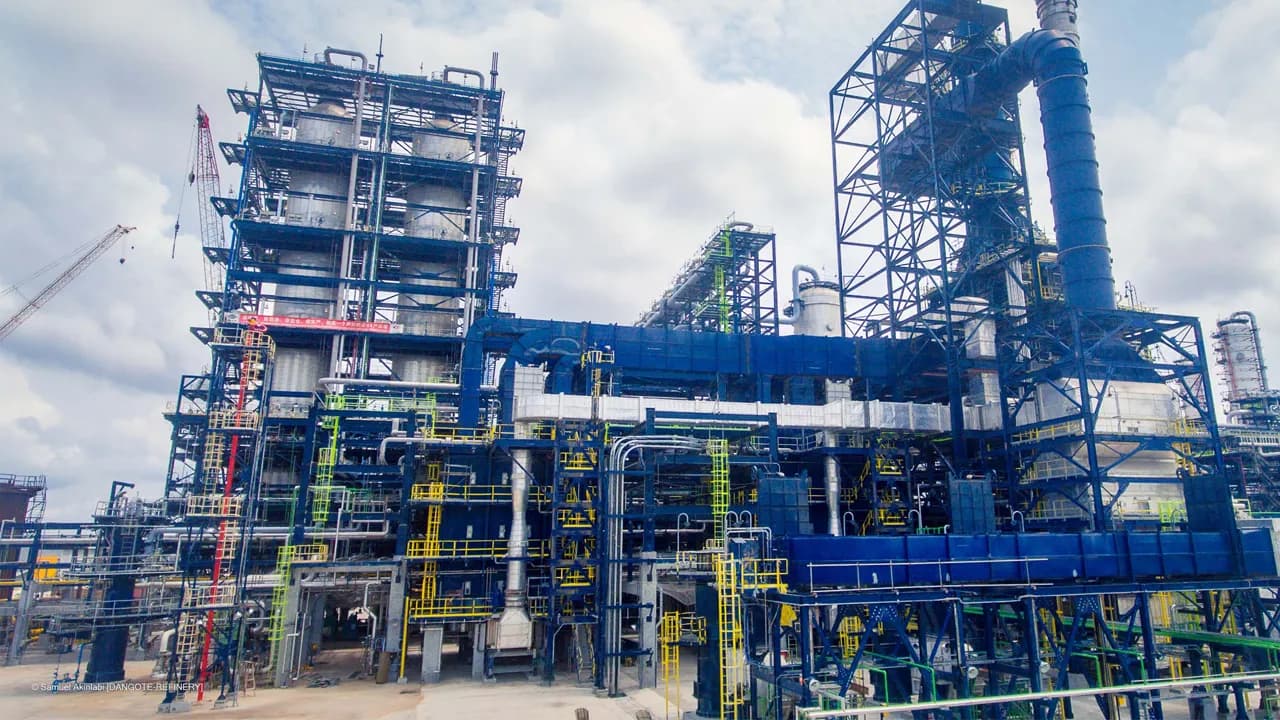
The Federal Government’s Naira-to-Crude initiative, introduced in October 2024, was meant to help local refineries like Dangote Refinery get crude oil in Naira instead of US Dollars. However, poor implementation has left refineries struggling to secure enough crude, affecting fuel production and keeping pump prices high.
Despite the government’s promise to supply 450,000 barrels per day (bpd) in Naira, recent findings show that Dangote Refinery received only 61,290 bpd in February 2025. The allocation for March dropped further to 4.75 million barrels, and most of it still has to be bought in dollars.
What Went Wrong?
Industry sources say that NNPCL has not been consistent in following the government’s directive to supply crude in Naira. Eche Idoko, spokesperson for the Crude Oil Refiners Association of Nigeria, confirmed that many refineries are not benefitting from the programme and are struggling to stay operational.
A source inside Dangote Refinery called the situation a “progressive reduction” in crude supplies, which contradicts the government’s claim that local refineries will get 385,000 bpd to ensure steady fuel production.
Is NNPC Meeting Demand?
The Nigerian National Petroleum Company Limited (NNPCL) insists that it can meet both local and international crude oil demands. NNPCL’s Chief Corporate Communications Officer, Olufemi Soneye, stated that oil production has increased to 1.8 million bpd, and the company is fully equipped to supply local refineries.
However, data from OPEC and the Nigeria Upstream Petroleum Regulatory Commission (NUPRC) suggests otherwise. Nigeria’s average oil production in 2024 was below 1.5 million bpd, raising questions about NNPCL’s claims.
Dangote Turns to Imported Crude
Because local crude supply is unreliable, Dangote Refinery has been forced to import crude oil from the United States to maintain production.
- In 2024, Nigeria imported 47,000 bpd of U.S. WTI crude, with a large portion going to Dangote Refinery.
- In December 2024, Dangote imported 358,000 bpd of crude, according to Bloomberg tanker-tracking data.
- In February 2025, the refinery expects another 12 million barrels from the U.S.
Impact on Nigerians
The Naira-to-Crude initiative was supposed to lower petrol prices and stabilise the exchange rate by reducing the need for dollar transactions in the oil sector. However, because local refineries still buy crude in dollars, Nigerians remain exposed to global oil price volatility.
- When global oil prices rise, pump prices in Nigeria go up.
- If crude supply remains inconsistent, local fuel production will suffer.
- High demand for forex continues to weaken the Naira.
What Needs to Change?
Experts believe the government must fully implement the Naira-to-Crude policy and ensure local refineries get stable crude supplies. Dr Bala Zakka, a petroleum analyst, argues that Nigeria’s domestic crude should not be tied to international oil prices. Instead, a portion should be reserved for local refineries at stable rates.
For now, Nigeria is slowly becoming a major refining hub in West Africa, with Dangote Refinery reducing the country’s fuel imports. However, without reliable crude supply, local refineries will continue to struggle, and Nigerians will keep facing high fuel prices.