

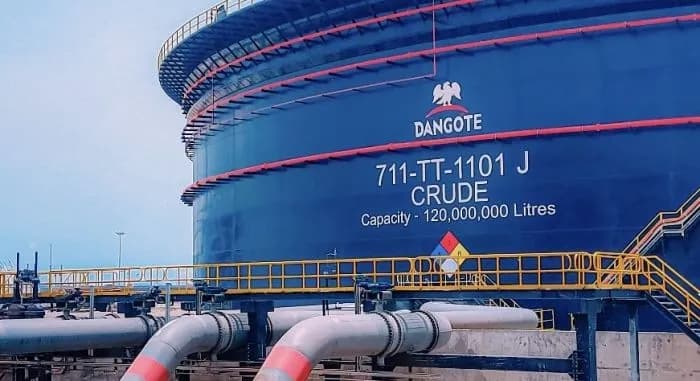
The petrol-producing unit at Nigeria’s 650,000 barrels-per-day Dangote refinery went offline after a catalyst leak and related technical faults, with engineers expecting repairs to last at least two weeks.
Industry tracker IIR Energy confirmed that the refinery’s 204,000 bpd Residue Fluidised Catalytic Cracking Unit (RFCCU) stopped operations on August 29. Two industry sources also verified the shutdown but requested anonymity. Dangote has yet to release an official statement.
Meanwhile, petrol prices in Nigeria Depots are already reflecting tighter supply concerns. On September 1, Rainoil sold at ₦824 per litre, Dangote and Integrated at ₦821, Aiteo at ₦822 in Calabar, Evergreen at ₦840 in Port Harcourt, Ever at ₦840 in Warri, and Parker at ₦838.
As of today, Rainoil raised its pump price to ₦870 per litre, representing a ₦46 or 5.6% increase in just three days. TSL ₦870 in Port Harcourt, Wosbab ₦850 in Lagos, and Prudent ₦865 in Warri. Energy analysts confirmed to Petroleumprice.ng that the two-week shutdown is expected to further strain domestic supply and distribution, making the refinery outage a direct factor in the fresh price surge.
Exports Still on Track
Despite the outage, ship-tracking data from Kpler shows that the refinery’s first shipment of petrol to the United States remains on schedule and should arrive in New York later this month. Since starting operations last year, the $20 billion facility has rapidly expanded output, reshaping global crude and fuel trade flows. However, it has also battled frequent technical setbacks. In May, Reuters reported the RFCCU would operate at reduced capacity through October after earlier disruptions.
Market Impact
The two-week downtime has already tightened gasoline supply in the Atlantic Basin. As a result, U.S. refiners are enjoying higher margins. On Wednesday, the U.S. gasoline crack spread—the difference between gasoline and crude prices—rose nearly 3% to its highest level since August 19, after spiking more than 8% the previous day. Analysts say the shutdown underscores the refinery’s growing influence on global fuel markets, while also exposing its operational fragility.