

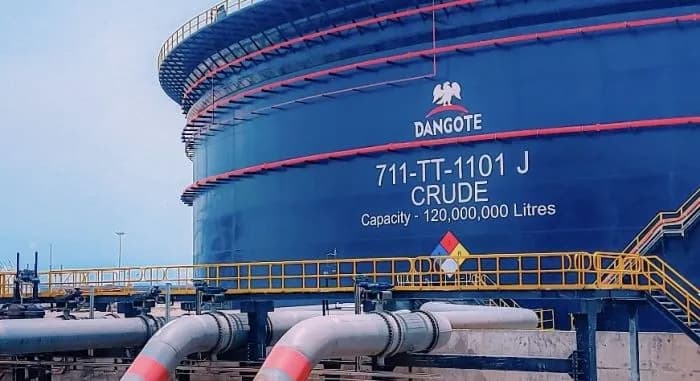
The Dangote Petroleum Refinery now operates a multi-stage truck loading system that governs how products move from ticket purchase to physical loading. Documents obtained by Petroleumprice.ng outline each stage of the process, showing where approvals occur and where delays often build up.
Below is a breakdown of the full loading procedure.
1. Ticket Sale and Document Preparation
The process begins when a customer purchases product tickets. The customer or an appointed representative must then assemble all documents required for loading approval.
These include:
- Driver’s licence
- Truck papers (truck chart)
- Product coupon
- Any additional documents requested by the refinery
Incomplete documentation halts the process at this stage.
2. Regulatory Acknowledgement
The customer submits all documents to the regulatory desk for verification and acknowledgement.
According to the documents:
- One processing cubicle handles all applications.
- More than 50 applicants may queue at the same time.
- Officials process submissions slowly, leading to extended waiting periods.
This stage often creates the first major bottleneck.
3. Fan Slip Office Processing
After regulatory approval, the documents move to the Fan Slip Office for issuance of the Final Authorization Note (FAN).
Operational conditions include:
- Over 20 representatives may queue to submit tickets.
- Submission alone can take more than one hour.
- Processing typically lasts two to three hours or longer before the FAN becomes available for collection.
Delays here add significantly to the overall waiting time.
4. Security Department Recording
Once the FAN is issued, the customer submits the documents to the Security Department. Security personnel record the transaction and clear the documentation before the process continues.
5. Union Processing and Document Handover
After security clearance, officials return the documents to the customer. The customer then completes the required union procedures before proceeding further.
6. Final Access for Loading
Only after completing all prior steps does the refinery grant the truck access to the loading area. At this point, physical loading can begin.
Operational Impact
The reviewed documents show a process driven largely by manual handling and sequential approvals:
- Multiple checkpoints across different offices
- Long queues at the regulatory and Fan Slip units
- Limited processing capacity
- Significant idle time between stages
As a result, total processing time can exceed 24 hours before a truck enters the refinery for loading.
Why the Process Matters
The loading procedure directly affects product evacuation, truck turnaround time, and supply to depots nationwide. For marketers and transport operators, prolonged access timelines translate into higher logistics costs and slower product circulation.
Industry observers note that expanding processing points and digitising documentation could shorten approval cycles. Until then, the current step-by-step framework continues to define how products exit Nigeria’s largest refinery.