

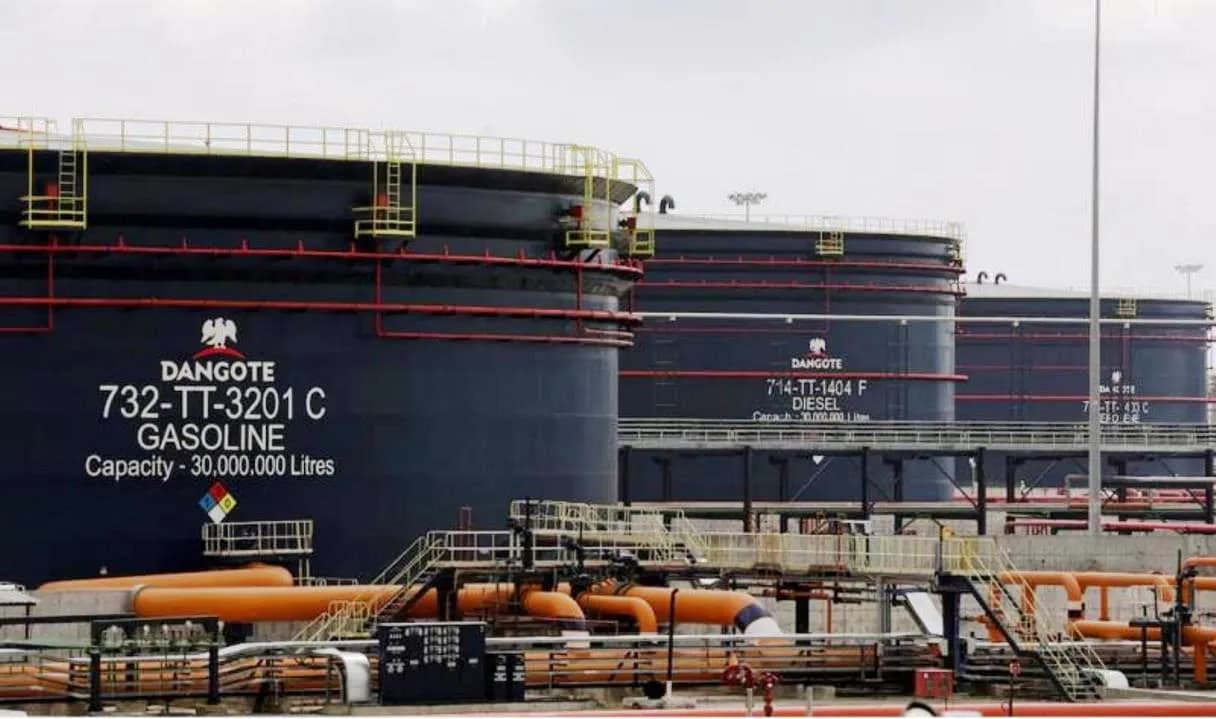
The Dangote Petroleum Refinery has taken delivery of four cargoes of crude oil from the Nigerian National Petroleum Company Limited (NNPCL) under the newly implemented naira for crude sale agreement. Officials from both the refinery and the Federal Government confirmed this development on Tuesday, marking the start of a significant shift in Nigeria’s domestic fuel supply strategy.
These four cargoes were delivered within the last three weeks, as the Federal Government began selling crude oil to local refineries in naira. Sources close to the deal stated that more crude deliveries to Dangote are expected in the coming weeks, solidifying the refinery’s position as a key player in Nigeria’s fuel market.
A senior official from the refinery, who spoke on condition of anonymity due to a lack of authorisation to speak with the press, said, “The naira-for-crude programme has commenced, and the Dangote Refinery has so far received four cargoes of crude oil. We anticipate further deliveries in the coming weeks.” The official also noted that this initial phase of the agreement would last for six months, with the possibility of renewal depending on the government’s decision.
This programme represents a critical step in addressing Nigeria’s fuel supply challenges, as the refinery prepares to begin the sale of refined Premium Motor Spirit (PMS), diesel, and aviation fuel to local marketers. The refinery’s first batch of refined products is expected to be sold directly in naira, signalling a major shift in the nation’s downstream petroleum sector.
The Dangote Refinery, with a capacity of 650,000 barrels per day, faced initial challenges in securing crude oil for refining. Aliko Dangote, President of the Dangote Group, previously raised concerns about international oil companies (IOCs) allegedly attempting to frustrate the refinery’s operations by refusing to supply crude directly to the facility. The IOCs, according to Dangote, preferred to sell crude oil through foreign intermediaries, thereby driving up prices for local buyers.
In particular, Dangote officials pointed out that IOCs were offering crude to the refinery at a premium of $2 to $4 per barrel above the official price set by the Nigerian Upstream Petroleum Regulatory Commission (NUPRC). The group claimed this premium made it difficult to operate competitively within the local market, as foreign oil producers prioritised exports to Asian countries over supplying crude to Nigerian refineries.
Despite these setbacks, the Nigerian government intervened by approving the naira for crude sale proposal during a Federal Executive Council (FEC) meeting in July 2024. This initiative, championed by President Bola Tinubu, aims to address the refinery’s crude supply issues by selling up to 450,000 barrels of crude oil per day to local refineries, including Dangote, in exchange for naira.
The naira for crude programme commenced officially on October 1, 2024, with NNPCL supplying about 385,000 barrels of crude oil daily to the Dangote Refinery, as confirmed by a government committee overseeing the initiative. This amounts to approximately 11.5 million barrels of crude per month, which will be refined into petrol, diesel, and other by-products for the Nigerian market.
The Dangote Refinery’s receipt of these initial cargoes marks a milestone in Nigeria’s efforts to boost local refining capacity and reduce dependency on fuel imports. With the refinery now in a position to refine and sell PMS domestically, the government expects a reduction in fuel supply shortfalls and price instability. The refinery’s output is anticipated to ease pressure on NNPCL and other marketers, who have struggled to meet local demand for petrol.
Chinedu Ukadike, National Publicity Secretary of the Independent Petroleum Marketers Association of Nigeria (IPMAN), hailed the government’s decision to supply crude oil to Dangote. “This is a very positive move, as it ensures that Dangote can refine enough petroleum products for the domestic market. NNPCL had earlier raised concerns about Dangote’s production capacity, but with the delivery of four cargoes, we expect an improvement in the supply of PMS and other refined products,” Ukadike said.
He also stressed that the supply-demand dynamics would eventually determine the price of PMS in the domestic market. “Once the market adjusts, we could see a reduction in the prices of refined products, driven by adequate supply,” Ukadike added.
The naira for crude initiative is part of a broader effort by President Tinubu’s administration to stabilise Nigeria’s energy sector and support the country’s foreign exchange reserves. By trading crude in naira, the government seeks to limit the outflow of foreign exchange while ensuring a steady supply of crude to local refineries.
Additionally, the agreement is expected to support Nigeria’s ongoing efforts to boost its local refining capacity, reducing reliance on imported refined products. This is particularly crucial as the country moves towards implementing key provisions of the Petroleum Industry Act (PIA), which mandates that crude oil produced in Nigeria should prioritise domestic consumption.
The Federal Government is hopeful that by securing a reliable crude supply for the Dangote Refinery, the country will see a stabilisation in fuel prices and a reduction in fuel import costs. The government has also pegged the exchange rate for crude oil transactions under this agreement, though it remains unclear whether this will remain fixed for the duration of the six-month trial period.
Operators in the downstream sector are optimistic about the long-term benefits of the naira-for-crude initiative, noting that it could pave the way for further investment in local refining capacity. As more refineries come on stream, the reliance on foreign crude and refined products is expected to diminish, driving Nigeria towards energy self-sufficiency.
In conclusion, the delivery of these first four cargoes to the Dangote Refinery represents a significant step forward for Nigeria’s oil and gas sector. As the naira-for-crude programme unfolds, industry stakeholders will be closely monitoring its impact on fuel supply, pricing, and the broader economy. If successful, this initiative could transform Nigeria’s refining landscape and position the country as a leading player in Africa’s energy market.