

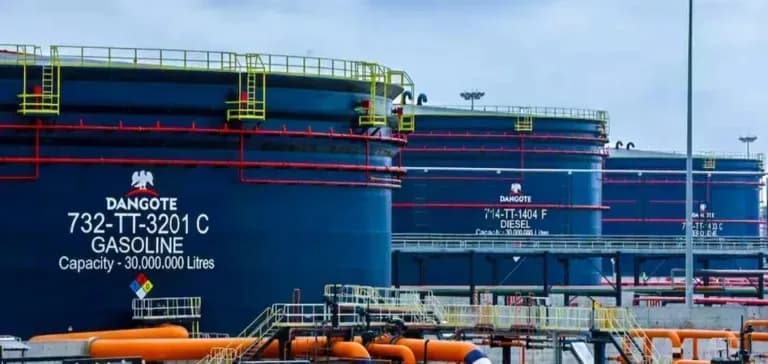
Dangote Petroleum Refinery has rejected claims that petroleum products produced at its facility are being exported to Lomé, Togo, and subsequently re-imported into Nigeria, describing the allegation as unfounded and inconsistent with commercial realities.
The refinery's management issued the clarification on Tuesday in response to reports and industry discussions that emerged after an S&P Global Energy analyst, Matthew Tracey-Cook, disclosed during a webinar on June 19 that Dangote-origin products had become increasingly dominant in waterborne fuel deliveries into Nigeria through the Lomé ship-to-ship trading hub.
In a statement titled "PMS: Response to Unsubstantiated Claims and Tissue of Lies," the refinery said available trade flows, contractual arrangements and market economics do not support suggestions that it is facilitating the export and re-importation of its products. The company stressed that its sales contracts and tender terms expressly prohibit buyers from reselling or re-importing products into Nigeria.
Dangote Refinery argued that such a trading arrangement would make little commercial sense. According to the company, moving petroleum products from its Lekki facility to Lomé and back into Nigeria would attract additional logistics costs estimated at between $82 and $90 per metric tonne. It noted that the extra expenses associated with shipping, storage, financing and handling would significantly erode margins and make the transaction economically unattractive.
The refinery also stated that it does not offer export discounts large enough to create arbitrage opportunities between export and domestic markets. It maintained that there is no financial incentive for a producer to incur additional transportation costs only for the products to return and compete in its largest and nearest market.
Addressing concerns over traceability, the company said it maintains detailed records covering lifting locations, nominated vessels, counterparties and declared destinations for all product sales. It added that any suggestion that it knowingly supports re-importation is inconsistent with its compliance procedures and contractual controls.
Management further argued that encouraging imports into Nigeria would contradict the refinery's long-standing position on energy security and local refining. According to the company, increased imports place pressure on foreign exchange reserves, weaken domestic industrial growth and undermine efforts to reduce Nigeria's dependence on imported petroleum products.
The clarification comes amid growing scrutiny of regional fuel trade flows following reports that Dangote products account for a significant share of petroleum cargoes moving through the Lomé offshore hub. While acknowledging the importance of Lomé as a major transshipment centre serving West African markets, Dangote Refinery insisted that allegations of deliberate export and re-importation of its products into Nigeria are not supported by commercial logic, contractual arrangements or verifiable trade data.