

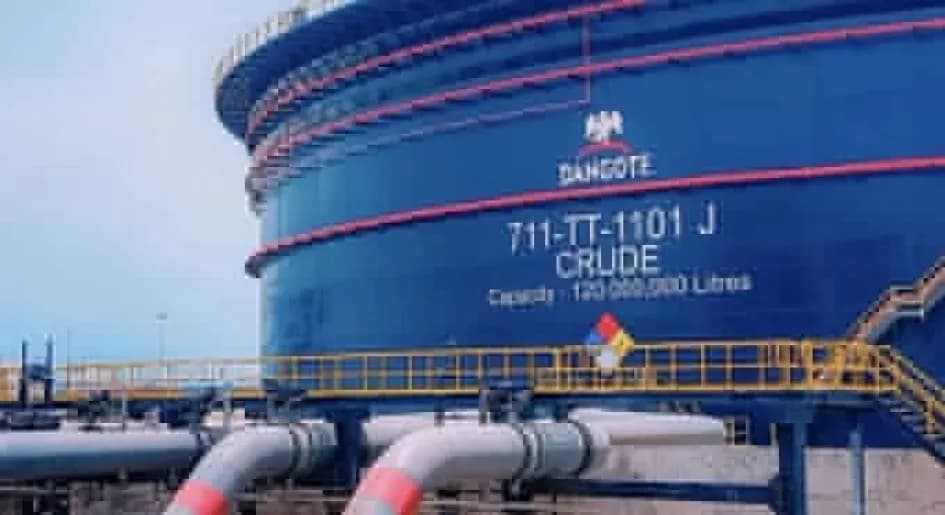
Operations at Dangote Petroleum Refinery’s gasoline production unit have reportedly been running below full capacity since late May following a combination of feedstock limitations and equipment-related issues, according to industry data cited by Reuters.
The report, which referenced energy market intelligence firm IIR Energy, indicated that the refinery’s gasoline-making unit has been operating at about 34 per cent below its maximum rate since May 21. However, the facility is expected to restore full production levels before the middle of June as repair works near completion.
The affected unit, known as the Residue Fluid Catalytic Cracking Unit (RFCCU), plays a central role in the production of gasoline at the 650,000-barrels-per-day refinery.
According to IIR Energy, the refinery initially encountered challenges linked to the type of crude oil being processed, which reduced the volume of feedstock available for the gasoline unit.
The consultancy further disclosed that an operational issue involving the RFCCU’s flue gas slide gate valve later emerged, prompting maintenance work within the facility.
“Initially, lighter crude being processed resulted in insufficient feed availability for the RFCCU,” IIR Energy said in comments cited by Reuters, adding that repairs to the valve issue were almost complete.
Dangote Refinery had not publicly commented on the report as of the time Reuters sought a response.
The reported reduction in gasoline-unit activity comes at a period of heightened volatility in global energy markets, with crude oil prices remaining sensitive to geopolitical developments in the Middle East.
Despite the lower operating rate at the gasoline unit, there has been no indication of disruption to domestic petrol supply, while the refinery continues to play a dominant role in Nigeria’s fuel market.
The facility, which commenced phased operations before reaching full-scale refining activities, was established to reduce Nigeria’s dependence on imported petroleum products and strengthen domestic refining capacity.
Market data cited in the Reuters report also showed a decline in gasoline exports from the refinery in recent months.
According to commodities analytics firm Kpler, gasoline exports from the refinery fell to about 17,000 barrels per day in May and have averaged roughly 10,000 barrels per day so far in June.
The figures represent a significant drop from April, when gasoline exports reportedly reached approximately 81,000 barrels per day.
The decline in export volumes coincides with the reported operational constraints at the gasoline production unit, although the refinery continues to supply products to both domestic and export markets.
Since commencing operations, Dangote Refinery has supplied and exported a range of refined products, including petrol, diesel and aviation fuel, becoming an increasingly important contributor to fuel supply within Nigeria and across parts of West Africa.
Industry observers are expected to monitor the refinery’s return to full operating rates, particularly as regional fuel demand remains strong and global supply conditions continue to evolve.