

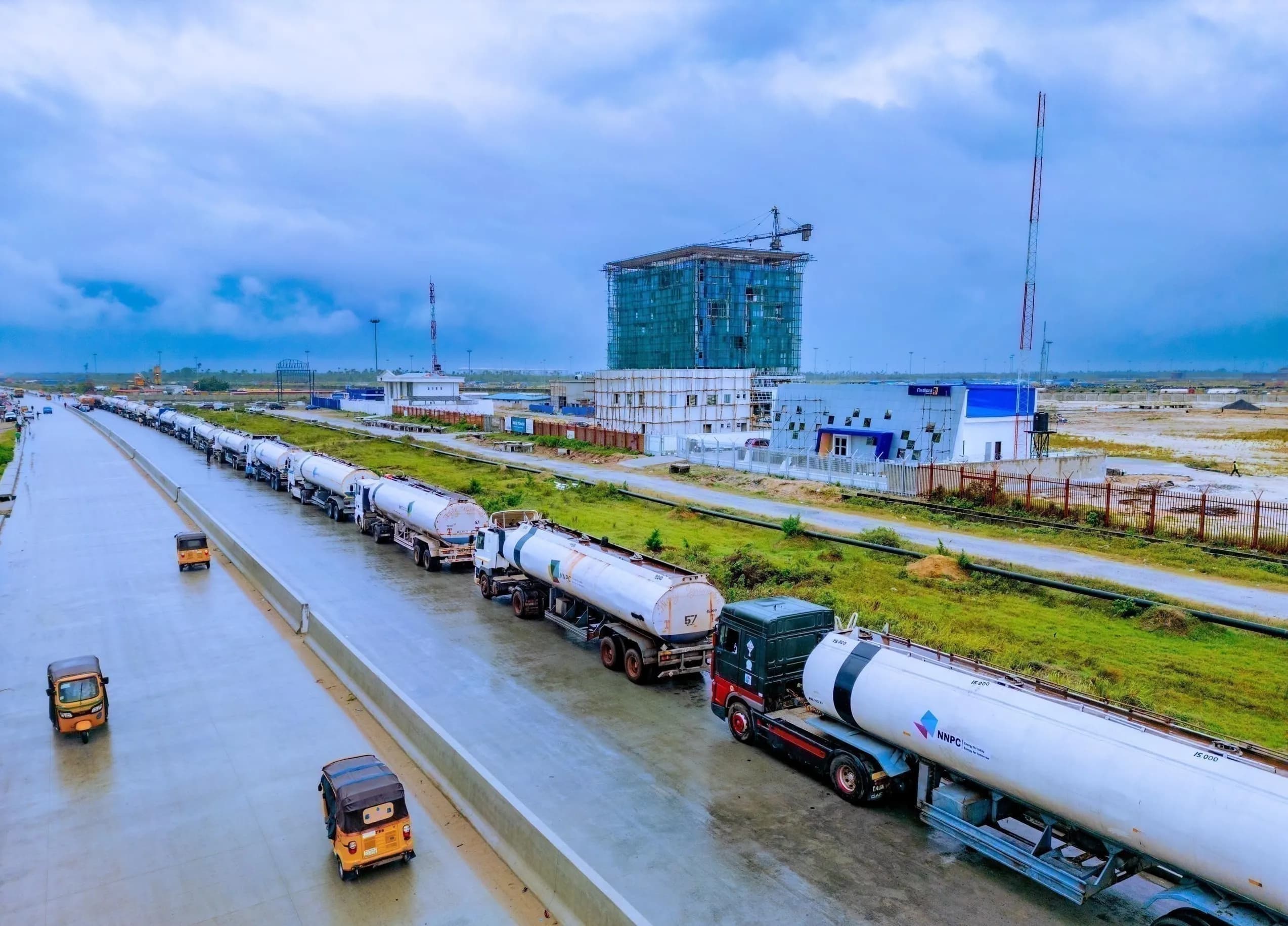
Dangote Petroleum Refinery has halted gantry loading of petrol following a sharp increase in its ex-depot price, leaving dozens of trucks at a standstill and triggering fresh tension across the downstream market, industry sources told petroleumprice.ng.
The refinery halted PMS loading at midnight after increasing its gantry price to ₦799 per litre from ₦699. Operators described the move as unusual, as Dangote typically loads trucks 24 hours a day, seven days a week.
By Tuesday morning, trucks remained idle at the gantry, according to marketers on site. Buyers who processed payment slips at the old price but failed to load before the shutdown must now top up to the new rate before lifting products.
One marketer questioned whether customers would be forced to add funds despite completing final slips and joining the queue. The marketer also raised concerns about a possible breach of contract. According to the source, industry players may need to engage the Federal Competition and Consumer Protection Commission (FCCPC) if the issue persists.
Reconciliation After Sudden Price Adjustment
Sources familiar with the refinery’s operations said the halt appears linked to reconciliation after the price increase. By suspending gantry activities, the refinery can align pending volumes and payments with the revised price before resuming loading.
Dangote announced the price hike on Monday, a move that quickly rippled through the downstream market. The adjustment has reshaped supply economics for marketers and depot operators that depend heavily on the refinery for petrol supply.
Retail prices have begun to respond. MRS stations have been instructed to sell at ₦839 per litre. Stations supplied by Dangote-linked marketers are now adjusting pump prices, with several outlets moving toward the high ₦800s per litre.
Market Impact and What Comes Next
Market participants say the shutdown has deepened supply uncertainty, especially for independent marketers that rely on steady gantry access to meet daily demand. Several warned that prolonged delays could tighten availability and push prices higher in the open market.
Attention has now shifted to when gantry loading will resume and whether affected marketers will formally challenge the reconciliation process. For many operators, the episode underscores how pricing shifts and operational decisions at Nigeria’s largest refinery can quickly reshape the entire fuel supply chain.