

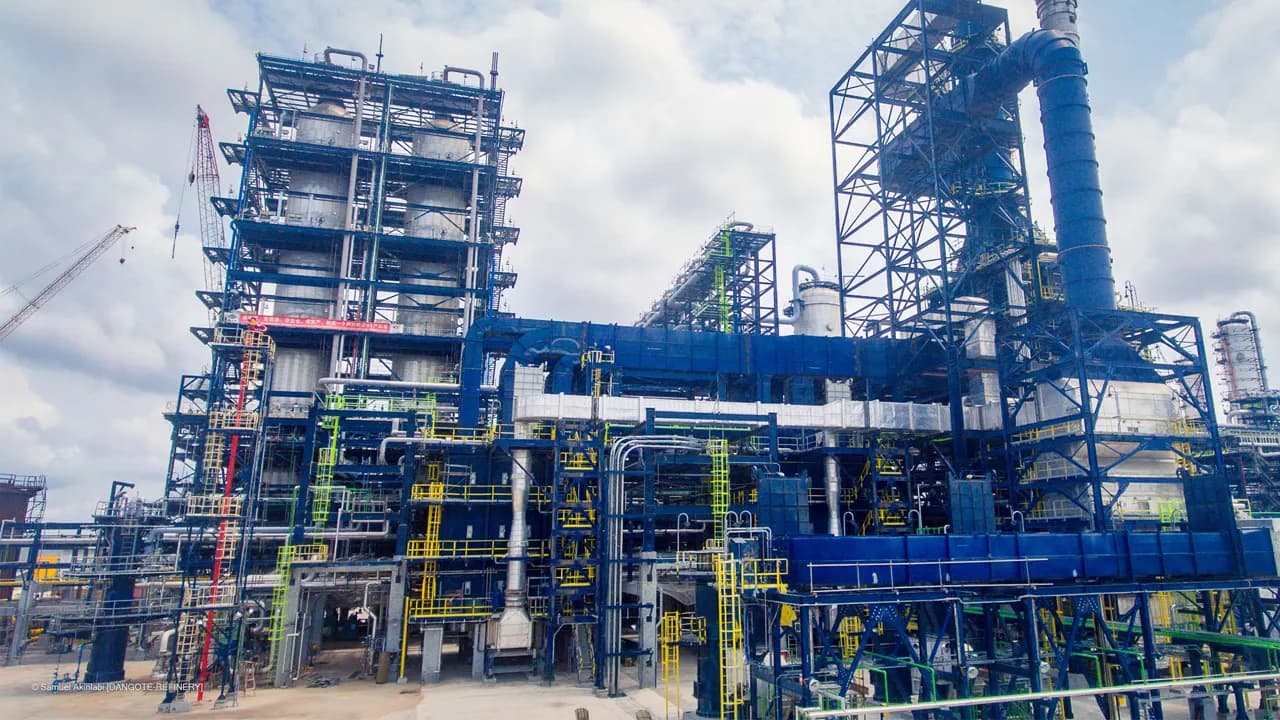
Nigeria’s downstream oil and gas landscape is entering a new phase as the Dangote Refinery intensifies its maritime operations. With production ramping up, the $20bn facility says it is positioning itself to receive about 600 vessels annually, a move that underscores its ambition to operate as a global merchant refinery rather than a conventional pipeline-fed plant.
The strategy reflects a deliberate shift towards scale, efficiency and supply-chain control, leveraging Nigeria’s coastal advantage to deepen participation in regional and international energy trade.
Merchant refinery model drives vessel traffic
Speaking during a facility tour, David Bird, Chief Executive Officer of Dangote Refinery and Petrochemicals, explained that the plant’s design relies almost entirely on maritime logistics. Unlike traditional refineries that depend on a single crude pipeline, Dangote Refinery sources feedstock from multiple global locations and evacuates products by sea.
According to him, this merchant refinery model similar to those in Rotterdam and Singapore makes vessel traffic central to operations. As production stabilises at 650,000 barrels per day, inbound crude shipments and outbound refined products are expected to drive the projected 600 vessel calls yearly.
Supply chain control and African expansion plans
Beyond volumes, the refinery’s maritime strategy is also about control. Bird noted that Dangote Industries has moved from spot chartering to time-chartering vessels, with outright vessel acquisition under consideration once cash flows strengthen. Recent global shipping disruptions, he said, reinforced the need for tighter control of logistics.
This approach aligns with Dangote’s wider Pan-African expansion, including plans for tank farms in Namibia and engagements in Ghana and Cameroon. By securing maritime routes and storage hubs, the group aims to guarantee reliable product outlets across the continent while reducing exposure to external supply shocks.
Port infrastructure boosts jobs and trade
At the heart of this logistics push is the Dangote Port, which has evolved from a construction jetty into a full-scale import and export hub. Engineers at the facility revealed that the port already handles fertiliser exports to markets such as Brazil and is being expanded to accommodate higher traffic.
Offshore, the refinery operates five Single Point Mooring (SPM) buoys capable of receiving the world’s largest crude carriers, including VLCCs. With natural water depths eliminating the need for dredging and turnaround times as low as 24–36 hours, the infrastructure positions Dangote Refinery as a major maritime energy hub. Ultimately, the expected 600 vessel calls yearly could translate into stronger local content, more jobs and increased non-oil export earnings for Nigeria.