

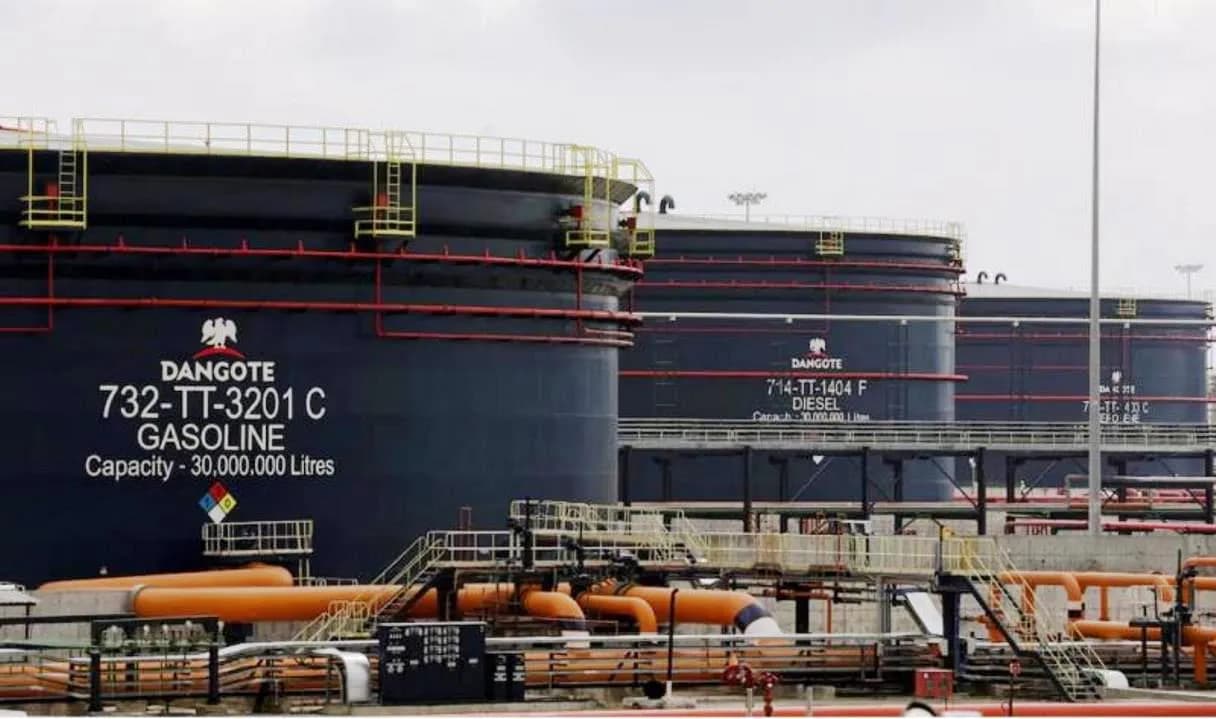
About 111,145 metric tonnes of Automotive Gas Oil (AGO), commonly known as diesel, sourced from India has discharged at the Dangote Petroleum Refinery, Lekki, even as Nigeria maintains a freeze on import permits for finished petroleum products in 2026.
Industry sources confirmed that the shipment was approved because it was classified as AGO feedstock (an intermediate product) rather than finished diesel, in line with current regulatory provisions enforced by the Nigerian Midstream and Downstream Petroleum Regulatory Authority (NMDPRA).
AESOP delivers AGO feedstock to Dangote
The cargo was transported by the tanker AESOP, which arrived Nigerian waters on January 25, 2026, and berthed at the Dangote Refinery on January 28, 2026. The vessel discharged the AGO feedstock directly into the refinery, with Vitol listed as the receiver, according to shipping and trading sources.
Market records show that AESOP is the next tanker to berth and discharge into the Dangote Refinery, making it the only confirmed AGO cargo to offload at the facility this month.
The gasoil cargo originated from Reliance Industries’ 1.4 million barrels-per-day Jamnagar refinery in India. Prior to berthing at Lekki, the vessel had waited offshore and carried out two ship-to-ship transfers off the coast of Togo, according to vessel-tracking data from Vortexa and Kpler.
No permits for finished diesel imports in 2026
The NMDPRA has so far not issued import permits for finished fuels, including PMS and finished AGO, in 2026. Dangote Refinery, however, clarified that the Indian cargo did not fall into that category.
“We are not importing finished PMS or Nigerian-specification AGO,” a Dangote spokesperson said, stressing that the shipment entered the country solely as AGO feedstock for processing at the refinery, not for direct sale into the market.
Specification gaps and processing flexibility
Reliance typically exports diesel that meets German fuel standards, which are stricter than Nigerian AGO specifications in areas such as sulphur content, viscosity, density, lubricity, cetane number and cloud point. However, Nigerian AGO standards are more restrictive on flash point, meaning some European-grade diesel may still require processing or blending to meet local requirements.
The discharge also coincides with maintenance activities at the Dangote Refinery. Sources said the refinery took its crude distillation unit offline on January 24 for maintenance, increasing reliance on intermediate feedstocks to sustain operations.
Product inflows remain steady
Despite the absence of import permits for finished fuels, Nigeria’s overall product inflows by sea have remained steady. Vortexa estimates total product arrivals at about 790,000 tonnes in January, broadly in line with monthly averages recorded in 2025.
Meanwhile, Reliance-origin AGO cargoes have been building up offshore West Africa, with the region emerging as a major destination for shipments loaded from Jamnagar in recent months.
Analysts say the Dangote AGO discharge highlights the evolving dynamics of Nigeria’s downstream market, where regulators continue to restrict finished fuel imports while allowing strategic feedstock inflows to support local refining and reduce long-term dependence on imports.