

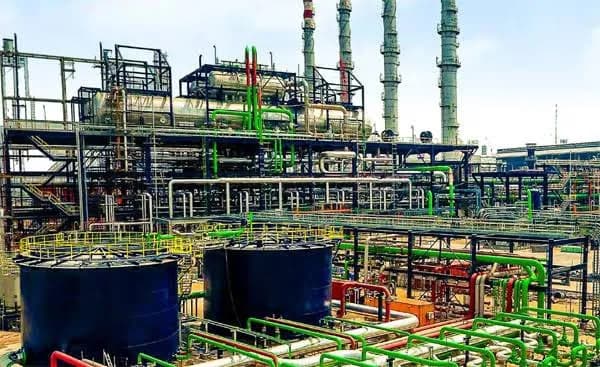
Dangote refinery is poised to process up to 400,000 barrels of crude oil per day (bpd) over the next two months, as it moves closer to full capacity. This comes as the refinery is set to receive approximately 24 million barrels of crude in October and November, according to a cargo allocation list seen by Bloomberg. The shift signals an increasing reliance on domestic crude supply.
Ronan Hodgson, a London-based analyst at FGE, highlighted that Dangote’s rising demand could tighten the West African crude oil market in the fourth quarter. He added that Nigeria’s crude exports may fall below one million barrels per day due to the refinery’s substantial intake.
However, delays in shipments remain a possibility. Petroluemprice understands that October’s schedule includes two cargoes that were postponed from September. Despite this, the volume allocated for the coming months is significantly higher than the refinery’s average intake of 255,000 bpd during the first half of the year, as it progressively scaled up operations.
Currently operating at 60-70 per cent capacity, the refinery is expected to reach full production soon, according to Vartika Shukla, chairman of Engineers India Limited, the project management firm overseeing the facility.
The latest allocations also suggest a reduction in Dangote’s purchases of US crude oil. Earlier this year, the refinery had imported millions of barrels of West Texas Intermediate (WTI) Midland crude, but later re-sold some of it and paused further acquisitions.
Last month, Nigerian National Petroleum Company (NNPC) Limited struck a deal to supply crude oil to the refinery in exchange for exclusive rights to distribute its gasoline.
Industry experts suggest that as Dangote ramps up processing rates, Nigeria could be closer to achieving its long-held goal of reducing reliance on costly imports of refined petroleum products. Hodgson noted that “as the refinery boosts production, the need for gasoline and diesel imports in West Africa will diminish rapidly.”
Meanwhile, NNPC is set to end its exclusive purchasing arrangement with the Dangote Refinery, allowing other fuel marketers to source petrol directly from the facility. This shift is intended to foster competition and enhance supply chain stability.
Fuel marketers can now negotiate prices directly with the refinery, based on prevailing market conditions, rather than depending on NNPC as an intermediary. An NNPC official confirmed the development to news men, saying, “Yes, it is true. We can no longer continue to bear that burden.”
In September, when the Dangote Refinery began producing petrol, NNPC was the sole entity authorised to buy the product and resell it to marketers for wider distribution. NNPC had been purchasing petrol from the refinery at N898.78 per litre and selling it to marketers at N765.99 per litre, effectively absorbing a subsidy of nearly N133 per litre.
As the refinery increases production capacity and domestic processing gains momentum, the dynamics of Nigeria’s oil market are expected to shift, with broad implications for both crude exports and refined product imports.