

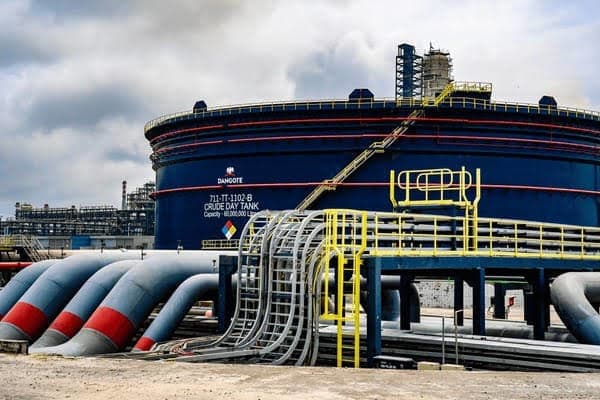
Dangote Petroleum Refinery has reduced its aviation turbine kerosene (ATK) gantry price by ₦100 per litre, bringing the price down to ₦1,650 per litre from ₦1,750, in a move expected to provide some relief to Nigeria’s aviation sector amid elevated fuel costs.
The price adjustment comes as airlines continue to grapple with rising operating expenses, with aviation fuel remaining one of the largest cost components for domestic carriers.
Checks by Petroleumprice.ng indicate that, as of yesterday, marketers were trading ATK at ₦1,790 per litre at the Dangote refinery, while Ardova sold at ₦1,785 per litre and Total traded at ₦1,790 per litre across Lagos depots, underscoring a reduction in the aviation fuel market.
According to Dangote Refinery, the reduction forms part of broader measures aimed at easing cost pressures on airlines and supporting uninterrupted fuel availability across the country.
The company stated that the initiative also includes a 30-day interest-free credit facility backed by bank guarantees for marketers and airline operators, alongside a shift from dollar-denominated pricing to a naira-based pricing model.
The development follows recent concerns raised by the Airline Operators of Nigeria (AON) over soaring Jet A1 prices since the escalation of geopolitical tensions linked to the U.S.–Iran conflict.
Airline operators had argued that domestic aviation fuel prices rose sharply from around ₦900 per litre before the crisis to between ₦2,700 and ₦2,900 per litre in parts of the market, with some supply quotes reportedly reaching ₦3,300 per litre.
Industry stakeholders have repeatedly warned that sustained increases in aviation fuel costs could intensify financial pressure on operators, disrupt route economics and threaten the sustainability of flight operations.
Dangote Refinery said the latest price cut is expected to lower procurement costs for airlines, improve operational stability and support efforts to moderate airfare pressures for passengers.
The reduction comes at a time of continued volatility in global energy markets, with crude oil movements and geopolitical developments continuing to influence aviation fuel pricing worldwide. For Nigeria’s airline industry, however, the latest cut may offer a measure of breathing space in an increasingly challenging operating environment.