

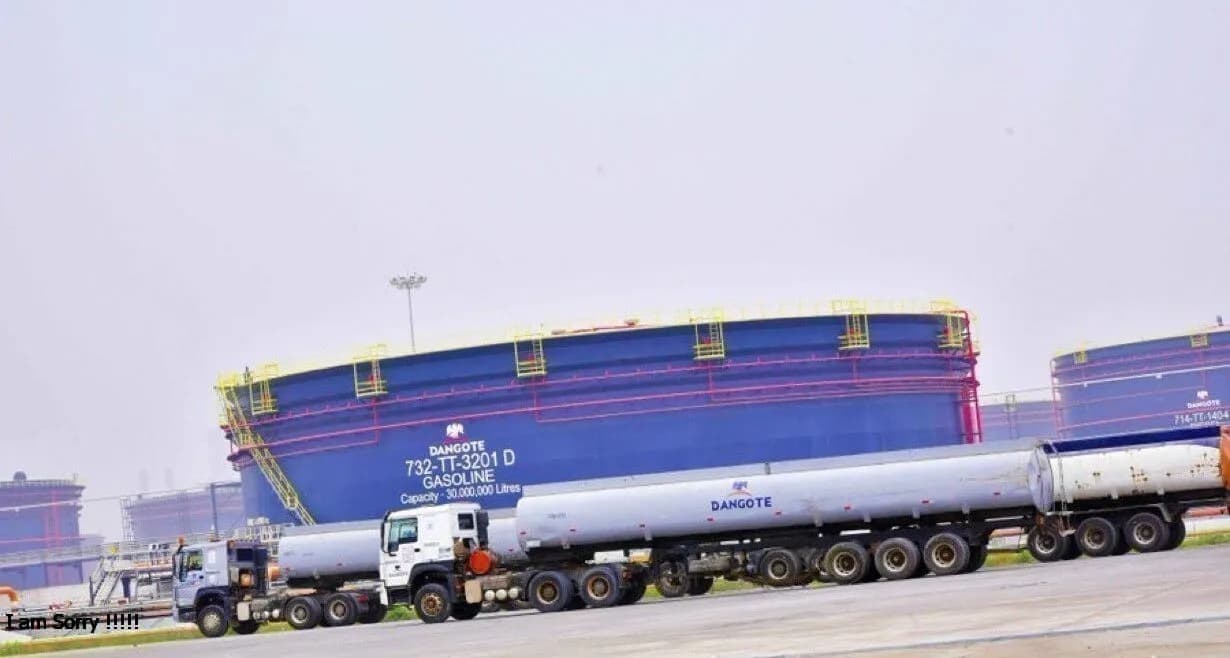
The Dangote Petroleum Refinery has called for an expansion of the Federal Government’s Naira-for-Crude policy, saying the initiative has played a key role in stabilising the naira while strengthening Nigeria’s domestic refining capacity.
The Managing Director of Dangote Refinery Plc, David Bird, made the call during a press briefing at the refinery complex in Lagos, where he provided an update on crude oil supply arrangements under the policy.
According to Bird, the programme reflects strong government support for local refining and should be scaled up in the country’s broader economic interest.
“I think it’s a great testimony to the level of government support that we get,” Bird said, responding to questions on the effectiveness of the policy.
Naira-for-Crude Supplies Up to 40% of Feedstock
Bird disclosed that between 30 and 40 per cent of the refinery’s current crude feedstock is sourced through the Naira-for-Crude arrangement, with the refinery engaging monthly with the Nigerian National Petroleum Company Limited (NNPCL) to determine suitable crude grades.
He explained that Nigerian crude grades vary significantly, making continuous engagement necessary to align supply with the refinery’s operational needs.
“We have a preference, we have a wish list, and we continue to work with government support to ensure we get the right allocations,” he said.
Beyond the naira-based supply, Bird said roughly 30 per cent of crude is purchased from Nigerian producers on the spot market, while about 40 per cent is sourced from international grades, despite the refinery being optimised primarily for Nigerian crude.
Refinery Pushes for Policy Expansion
Despite the current supply mix, Bird said the refinery would welcome a broader application of the Naira-for-Crude programme, noting its positive macroeconomic impact.
“Even at that level five cargoes a month, for example it has contributed to the stabilisation of the naira enormously,” he said.
He added that the refinery has the capacity to absorb additional crude volumes if allocations are increased, stressing that discussions with NNPCL and the Federal Government remain ongoing.
Bird also cited global geopolitical uncertainties as a reason Nigeria should prioritise domestic crude supply, warning that volatility in international markets could affect crude availability.
“It is in the country’s interest to supply domestically, because geopolitically it’s a very volatile situation,” he said, adding that domestic refining provides Nigeria with a secure offtake for its crude.
Policy Designed to Ease Forex Pressure
The Naira-for-Crude policy, which began in October 2024, allows local refineries to purchase crude oil from NNPCL and in naira rather than in US dollars.
The approach is designed to reduce pressure on foreign exchange, lower transaction costs, stabilise the local currency and strengthen domestic refining capacity. Under the framework, refineries supply petroleum products to the Nigerian market in naira, helping to retain more value within the local economy.