
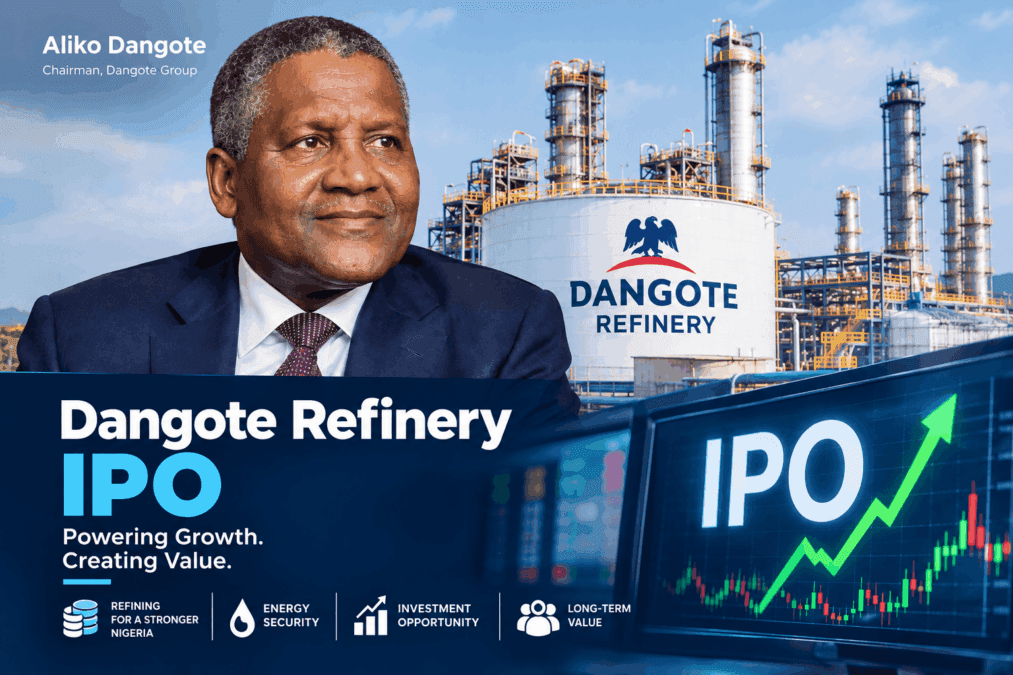
Dangote Petroleum Refinery’s ₦2.15 trillion initial public offering (IPO) is seeking to attract as many as 10 million retail investors, in a move that could significantly widen public participation in Nigeria’s capital market.
The offer involves 4.1 billion ordinary shares priced at ₦525 each, with the company pursuing a broad investor base beyond institutional investors and high-net-worth individuals. Recent reports indicate that the subscription deadline has been extended to October 27 to give more investors, including those in other African countries, time to participate.
The minimum subscription is 10 shares, costing ₦5,250 before applicable charges. Additional subscriptions must follow the multiples specified in the offer terms. The company is seeking to raise approximately ₦2.15 trillion if the offer is fully subscribed.
The investor target has drawn attention to the role technology could play in expanding access to financial markets. Through digital subscription channels, banks, fintech platforms and stockbrokers are expected to help investors participate without having to visit physical locations.
The Nigerian Exchange Group’s Group Managing Director and Chief Executive Officer, Temi Popoola, has said the transaction demonstrates how large Nigerian businesses can mobilise capital through deeper domestic markets, modern distribution systems and a wider investing public.
The NGX Invest API connects the exchange to more than 180 distribution channels, including stockbrokers, banks and fintech firms. Such infrastructure could help widen access to the offer, although participation remains subject to the approved subscription process and the role of regulated capital-market operators.
The Securities and Exchange Commission has advised prospective investors to obtain information through official channels and use only approved receiving agents and subscription platforms. It has also urged investors to read the prospectus and understand the terms and risks before committing funds.
Economist and investment analyst Bayo Ehinlomo has argued that an offering of this scale could encourage more young people and first-time investors to enter the capital market. The refinery’s size and visibility could make share ownership more familiar to people who have traditionally remained outside formal investment markets.
Stock analyst Lola Ogundipe has also highlighted the potential for a major listing to improve investor education and market liquidity. However, the long-term effect will depend on whether new investors remain active in the market and understand the risks associated with owning shares.
Nigeria’s domestic investors accounted for nearly 95 percent of transactions on the Nigerian Exchange in August 2026, while retail investors contributed ₦552.88 billion, according to figures cited in the original report. The Dangote offer could expand this participation if it converts its ambitious target into a substantial number of new shareholders.
The transaction comes after Nigerian banks raised ₦4.65 trillion during the banking sector’s recapitalisation exercise, demonstrating the capacity of domestic capital markets to mobilise significant funds. A successful refinery listing could encourage other large companies to consider public offerings as a means of raising capital and broadening ownership.
The IPO has also renewed discussion about how Nigeria can make its capital market more inclusive while maintaining investor protection. At a symposium marking the 30th anniversary of the Association of Issuing Houses of Nigeria, market participants discussed reforms, technology and the need to improve access to investment opportunities.
Ike Chioke of Afrinvest highlighted the importance of formalising small and medium-sized enterprises and helping them access funding. Kemi Awodein also spoke about the role of issuing houses in broadening participation and supporting the development of the market.
A keynote address by Securities and Exchange Commission Director-General Emomotimi Agama, delivered by Tony Iloka, emphasised technology, sustainability and regional integration. The discussion included tokenisation, digital assets, open data and artificial intelligence as areas that could influence the future of financial markets.
Ozofu ‘Latunde Ogiemudia drew attention to the 18-year gap between the Investments and Securities Act of 2007 and the 2025 legislation. He also stressed the importance of regulatory compliance and audited financial accounts for small and medium-sized businesses seeking to raise capital.
Abiodun Akinjayeju discussed the effect of higher capital requirements on market operators and the significance of the Nigerian Exchange’s demutualisation. SEC official Adama Babadoko highlighted regulatory sandboxes and technology-driven supervision as tools for responding to innovation in the financial sector.
Market participants have also pointed to improved equity performance, moderating inflation and a stronger naira as factors that could support corporate fundraising. Chioke said companies could consider different financing options, including debt and preference shares, rather than relying exclusively on ordinary equity that permanently dilutes existing ownership.
The Dangote IPO also places attention on the prospects for greater integration between African exchanges. Popoola has highlighted the African Exchanges Linkage Project, which is intended to make it easier for investors to access markets across the continent, including in Nairobi, Johannesburg and Gaborone.
However, the scale of the refinery’s investor target does not itself establish how many people have subscribed or how many will ultimately become shareholders. The outcome will depend on investor demand, the completion of the offer and the subsequent listing process.
The offering is therefore being watched not only for the amount of capital it may raise, but also for its potential to bring a much wider group of retail investors into Nigeria’s formal investment market.