

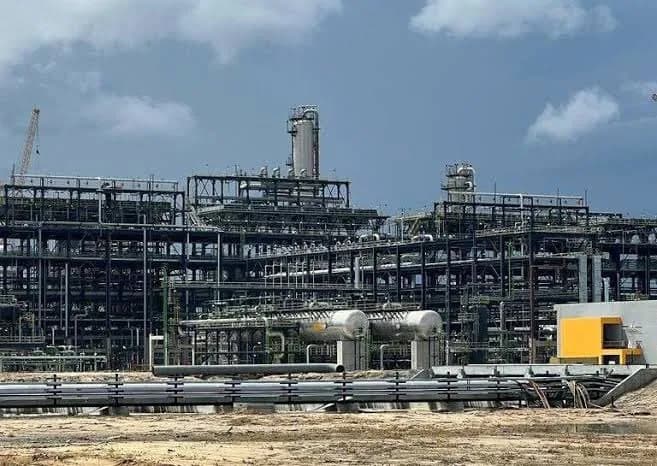
As Nigeria’s first Privately owned refinery Dangote Refinery becomes completely operational, new deals and partnerships are reshaping the country’s oil and gas landscape. The refinery’s collaborations with the Independent Petroleum Marketers Association of Nigeria (IPMAN), Nigerian National Petroleum Company Limited (NNPCL), Pinnacle Oil, and Petroleum Products Retail Outlets Owners Association of Nigeria (PETROAN) bring industry-wide implications, affecting everything from fuel distribution to domestic production capabilities.
Key Partnerships and Agreements
- NNPCL: Recently, NNPCL, through its subsidiary NNPC Gas Marketing Limited, signed a long-term gas supply deal with Dangote Refinery. Under this 10-year agreement, NNPCL will supply 100 million standard cubic feet per day (MMSCF/D) of natural gas, supporting both the refinery’s power generation and its processing needs. This collaboration enables Dangote Refinery to operate at scale, reducing its reliance on imported energy sources and setting a new benchmark in domestic energy independence.
- IPMAN: The partnership with IPMAN offers IPMAN’s extensive network of filling stations a direct channel for refined products from Dangote. By streamlining this supply chain, the agreement aims to ease fuel distribution across Nigeria, particularly in rural and semi-urban areas. With IPMAN’s influence over about 80% of the country’s retail outlets, this collaboration could reduce retail fuel shortages and stabilise prices for Nigerian consumers.
- Pinnacle Oil: Involving Pinnacle Oil in logistics aligns with the refinery’s goal of efficient product distribution. Pinnacle Oil, a leader in downstream storage and distribution, will manage portions of the supply chain for products refined at Dangote. Its state-of-the-art infrastructure in Lekki provides critical storage and transportation capabilities, helping to offset distribution challenges that previously affected fuel access across Nigeria.
- PETROAN: The partnership with PETROAN focuses on creating more resilient product distribution through smaller outlets across the country. By working with an association that represents the majority of independent operators, Dangote Refinery gains valuable leverage in optimising fuel availability and engaging in the deregulated market environment. This partnership is particularly important for achieving widespread, equitable access to petroleum products, which has been a critical issue for the sector.
Benefits for Each Stakeholder
- Dangote Refinery benefits from secured supply chains and an established market through partnerships that improve fuel accessibility, support reliable distribution, and enhance logistical efficiency.
- NNPCL strengthens its position in Nigeria’s gas sector by supporting domestic refining efforts, bolstering the gas-to-power initiative, and reducing the need for imports, which has historically strained Nigeria’s economy.
- IPMAN and PETROAN members gain direct access to domestically refined products, which reduces overhead costs associated with import dependence and fluctuating foreign exchange rates.
- Pinnacle Oil leverages its resources and infrastructure to facilitate efficient distribution, which is essential for Dangote Refinery’s vast output and timely delivery.
Initial Conflicts and Resolutions
Conflicts emerged early between Dangote and independent marketers, largely due to concerns over pricing, supply exclusivity, and competition dynamics in a deregulated market. IPMAN and PETROAN initially resisted the idea of concentrated refining control, fearing that Dangote’s capacity could lead to monopolistic practices or unfavourable pricing terms. NNPCL’s extensive stake in the project initially raised concerns about equitable access for smaller players and Dangote Refiner’s complaints of not getting crude when it’s needed and the controversy of product pricing between the industry giants. After negotiations, all parties established collaborative frameworks and agreed on transparent pricing models to mitigate concerns over market power and ensure fair terms for all stakeholders.
Economic Implications
The Dangote Refinery’s operationalisation and these strategic alliances promise economic benefits that extend beyond the refinery itself:
- Enhanced Self-Sufficiency: With capacity to meet Nigeria’s refined product demand, the refinery mitigates Nigeria’s dependency on imports, which previously depleted foreign reserves.
- Job Creation: The refinery and its partnerships are expected to create thousands of jobs, both directly and indirectly, benefiting the Nigerian workforce and stimulating local economies.
- Fuel Price Stabilisation: Direct access to domestically refined products could lead to more consistent pricing and lessen vulnerability to global oil price shocks.
Pending Issues and Future Outlook
Despite these advancements, challenges remain, particularly around regulatory adjustments and environmental sustainability. Some industry players continue to call for clearer frameworks on fuel subsidy removal and pricing deregulation, as well as assurances on environmental safety standards. Additionally, with more modular refineries set to join the market, maintaining equitable competition will be essential to prevent market concentration.
As Nigeria navigates these complexities, the Dangote Refinery and its alliances with NNPCL, IPMAN, Pinnacle Oil, and PETROAN mark a significant turning point in the nation’s oil and gas sector, with implications set to shape the industry for decades to come. The success of these collaborations could drive Nigeria closer to energy security, economic growth, and a strengthened position in the global oil market.