

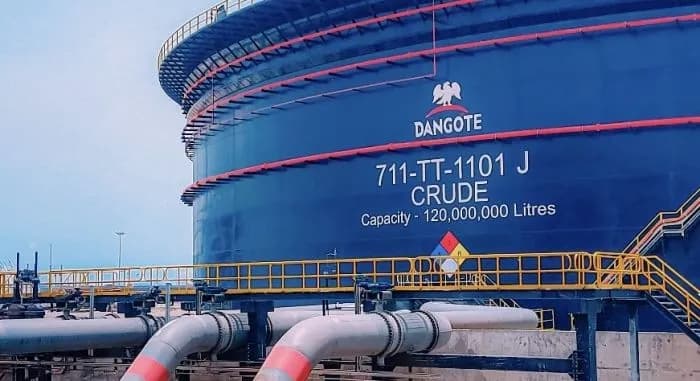
Nigeria’s 650,000 barrels-per-day Dangote Refinery, Africa’s largest single-train facility, is reportedly experiencing a prolonged shutdown of its Residue Fluidised Catalytic Cracking Unit (RFCCU). Industry analysis from IIR Energy suggests the outage, initially expected to last about two weeks, could now extend into November, though the refinery itself has not confirmed the development.
The RFCCU, critical for gasoline production, went offline on August 29 after catalyst leaks. Engineers now face major equipment replacement, disrupting operations at a time when Nigeria was positioning the plant to reduce its reliance on imported petrol.
Impact on Nigeria and West Africa
Nigeria consumes over 50 million litres of gasoline daily, and costly subsidy-backed imports largely meet this demand. The Dangote refinery aims to close that gap by meeting nearly all local needs while exporting the surplus.
With the RFCCU down for months, the import window reopens. This will likely force both the federal government and private marketers to secure additional cargoes at higher international prices, undermining energy security goals and keeping pressure on foreign reserves.
Across West Africa, expectations of supply from Lagos have now been dashed. Markets already face tighter balances, and the absence of Nigerian gasoline could tilt regional pricing further upward.
Global refined products outlook
The outage comes as Atlantic Basin product markets are vulnerable. U.S. refiners have been shipping increasing volumes into Africa and Europe, but the loss of Dangote’s output risks lifting gasoline crack spreads and extending dependence on overseas refiners.
Analysts warn that if Nigeria reverts to high import volumes, it could tighten global tanker availability and increase freight costs for Atlantic Basin routes.
Looking ahead
Traders now see refined product supply, rather than crude itself, as the short-term driver of volatility. Crude benchmarks slid on Thursday, but the disruption at Dangote will shake regional fuel markets, rattle Nigeria’s foreign exchange stability, and weigh on OPEC’s supply-demand balance through the final quarter of 2025.