

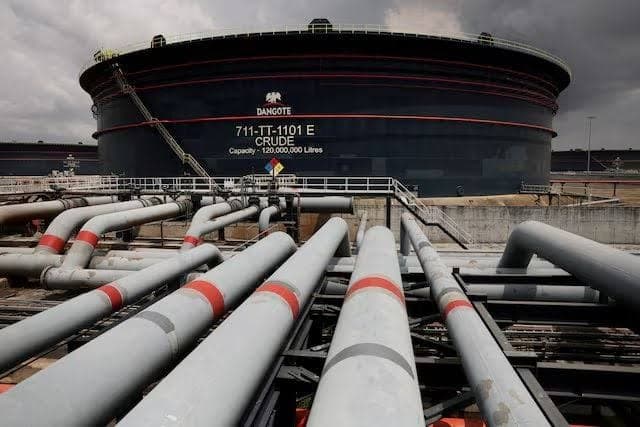
Dangote Refinery supplied a record 172,000 barrels per day (bpd) of refined petroleum products to West African markets in September, as deliveries from the 700,000 bpd facility rose to their highest level on record.
The September volume, which surpassed the previous record of 152,000 bpd recorded in August, was driven by shipments of gasoline, diesel and gasoil, jet fuel and other clean products to countries across the region, from Senegal to Angola.
According to Argus data, deliveries from the refinery to countries stretching from Senegal to Angola rose from the previous record of 152,000 bpd recorded in August.
Gasoline accounted for the largest share of the September deliveries at 62,000 bpd, while diesel and gasoil shipments stood at 57,000 bpd. Jet fuel deliveries reached 36,000 bpd, with other clean petroleum products accounting for a further 17,000 bpd.
The record regional deliveries came as crude receipts at the Dangote refinery also reached a new high. Argus tracking showed that crude receipts averaged 665,000 bpd in September, surpassing the previous record of 660,000 bpd recorded in June.
The growing export volumes highlight the refinery’s increasing importance to West African fuel supply, even as the region continued to rely on substantial volumes of imported refined products.
West Africa received 516,000 bpd of refined petroleum products from outside the region in September, according to Kpler data. Although the figure represented the second-lowest monthly volume since the end of 2017, imports from the European Union, the United Kingdom and Norway fell to a five-month low of 282,000 bpd.
Data from Nigeria’s downstream regulator, the Nigerian Midstream and Downstream Petroleum Regulatory Authority (NMDPRA), also showed that Dangote’s diesel and jet fuel production exceeded domestic demand between April and August, creating significant room for exports.
The refinery’s diesel output averaged 130,000 bpd during the period, compared with Nigerian consumption of 98,000 bpd. The surplus was even wider for jet fuel, with production averaging 136,000 bpd against domestic consumption of just 16,000 bpd.
Gasoline, however, presented a different picture. Nigerian consumption averaged 279,000 bpd between April and August, exceeding Dangote Refinery’s average output of 258,000 bpd. However, Nigeria also imported 78,000 bpd of gasoline during the period, enabling the refinery to export part of its own production when regional arbitrage opportunities emerged.
The latest figures point to a shift in the regional refined-products trade, with Dangote Refinery increasingly positioned not only as a major supplier to Nigeria but also as a significant source of petroleum products for West African markets.