

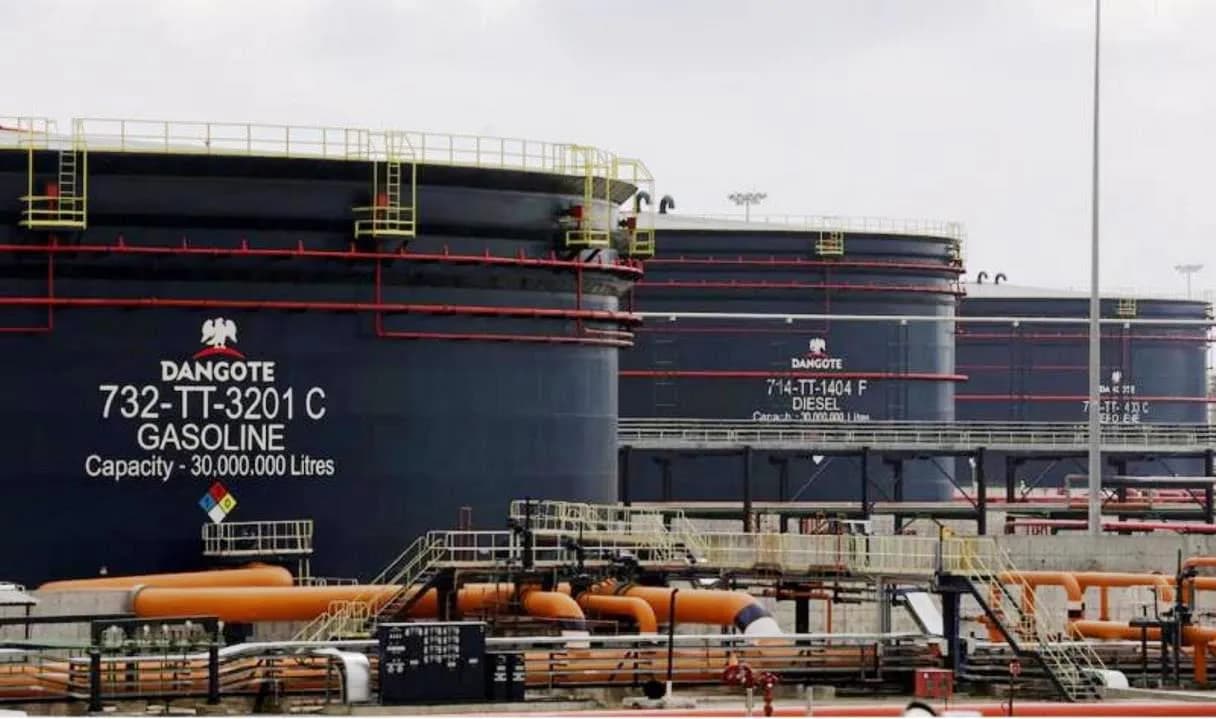
Swiss-based oil trading firm Mocoh is overhauling its strategy as Nigeria’s Dangote Refinery transforms the fuel supply chain across West Africa, disrupting traditional trade patterns and forcing global players to rethink their models.
For decades, Mocoh centred its operations around supplying premium motor spirit (petrol) to Nigeria, relying heavily on contracts with the Nigerian National Petroleum Company (NNPC) Limited. That model began to unravel in 2024 when the 650,000 barrels-per-day Dangote Refinery began injecting massive volumes of fuel into the local market.
“We saw a paradigm shift in early 2025,” said Olivier Lassagne, Mocoh’s newly appointed CEO, in an interview with Platts. “We lost most of our petrol trade with NNPC, but that’s pushed us to grow beyond our traditional niche and reposition for the future.”
Dangote Disrupts Traditional Import Routes
With Dangote now supplying most of Nigeria’s fuel demand domestically and exporting to nearby countries, European fuel imports have sharply declined. This shift has reduced Nigeria’s dependency on foreign petrol and altered the playing field for long-time suppliers like Mocoh.
To stay relevant, Mocoh has pivoted towards exporting surplus fuel from Dangote to regional markets such as Benin, Cameroon, and Burkina Faso. However, competition is intensifying. So far, Dangote has prioritised trading heavyweights like Vitol, BP, and Trafigura for major offtake agreements.
“Dangote values flexibility and market pricing. They aren’t tying themselves down with exclusive partners,” Lassagne explained. Mocoh, he added, is positioning itself as a nimble regional player in response.
Expanding Beyond West Africa
In 2024, Mocoh launched an East African trading desk, targeting emerging markets like Tanzania and Mozambique. While the region offers significant growth potential, infrastructure challenges remain a major barrier.
“Right now, the bottleneck isn’t pricing it’s infrastructure,” Lassagne noted. He cited port congestion in Beira, Mozambique, where ships sometimes wait up to two months to offload.
“We’re staying asset-light. We don’t want to get stuck with fixed investments if trade flows change again.”
Betting on Biofuels
Looking forward, Mocoh is also investing in renewable energy. The company has launched a biofuels trading unit and established a Nigerian feedstock aggregator to collect materials like used cooking oil and tallow for export to Europe.
Although Africa’s biofuels sector is still in its infancy, Lassagne sees long-term promise.
“Biofuels is a long-term bet, but we wanted to be ahead of the curve. Our focus remains firmly on Africa we’re not looking to diversify outside the continent.”
Adapting to a Changing Market
As Nigeria’s refining capacity grows and regional fuel flows evolve, traditional players like Mocoh are forced to adapt or risk fading out.
“It’s in our DNA to reinvent ourselves when the market changes,” Lassagne said. “And that’s exactly what we’re doing.”