

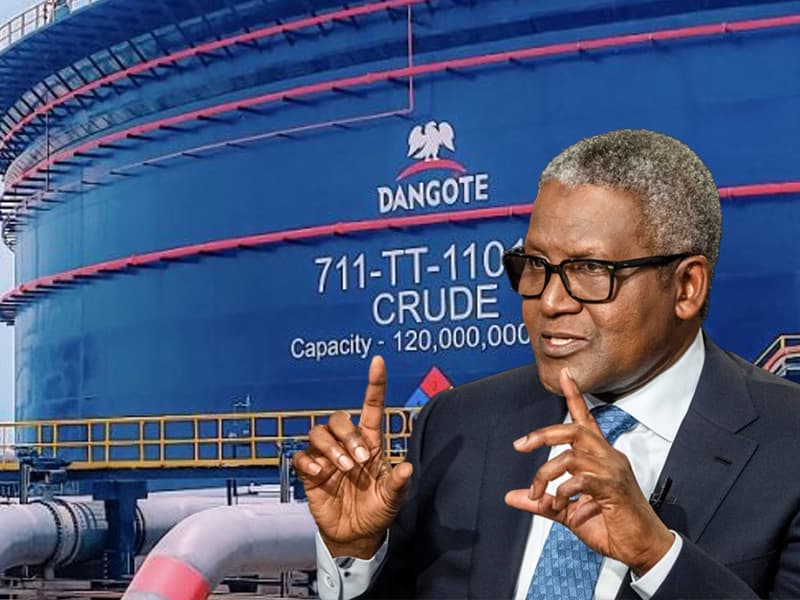
Dangote Petroleum Refinery has rejected the Nigerian National Petroleum Company Limited's (NNPCL) claim that it fully met its obligations under the Federal Government's naira-for-crude programme, stating that the national oil company supplied less than 25 percent of the crude cargoes expected under the arrangement.
The refinery's response follows NNPCL's position that it allocated all available naira-denominated crude cargoes to the refinery and did not withhold feedstock.
However, a senior Dangote Group executive told Petroleumprice.ng that the refinery received only three of the 14 cargoes expected under the programme.
"Out of the 14 cargoes expected under the arrangement, only three were supplied. That is not even up to 25 percent of the expected volume," the official said.
According to the executive, the refinery's assessment is based on the crude cargoes expected under the supply framework, which it said differs from NNPCL's position that deliveries depended on crude availability, cargo nominations and operational scheduling.
The official maintained that the crude volumes delivered under the arrangement were insufficient to support the refinery's expectations under the initiative.
The response comes after NNPCL, through its spokesman, Andy Odeh, told PUNCH that the company had supplied all crude cargoes available under the naira-for-crude arrangement and had not withheld feedstock from the refinery.
Odeh said NNPCL had allocated 100 percent of all available naira-denominated crude cargoes to Dangote Refinery in 2026, adding that actual deliveries were influenced by crude availability and the refinery's operational schedule.
But the Dangote executive insisted that the refinery's position should be measured against the expected supply under the arrangement rather than the number of cargoes NNPCL considered available.
"The issue is straightforward. The expected cargoes were 14, and only three arrived. That is the position," the official said.
The differing positions highlight the continuing disagreement between both companies over the implementation of the naira-for-crude programme and whether the volumes supplied were sufficient to sustain the refinery's operations under the initiative.