
Aliko Dangote said he plans to emulate fellow billionaire Mukesh Ambani and invest the profits from Africa’s biggest refinery into yet another sector after defying warnings and completing the mega fuel plant.
Dangote visited Reliance Industries Ltd.’s Jamnagar plant in India, the world’s largest refining complex, while seeking inspiration for the 650,000-barrel-a-day facility outside Lagos that started production this year, he said in an interview in New York on Monday.
The President of the Dangote Group, Alhaji Aliko Dangote, is planning to reinvest the profits from his $20bn refinery in other local businesses.

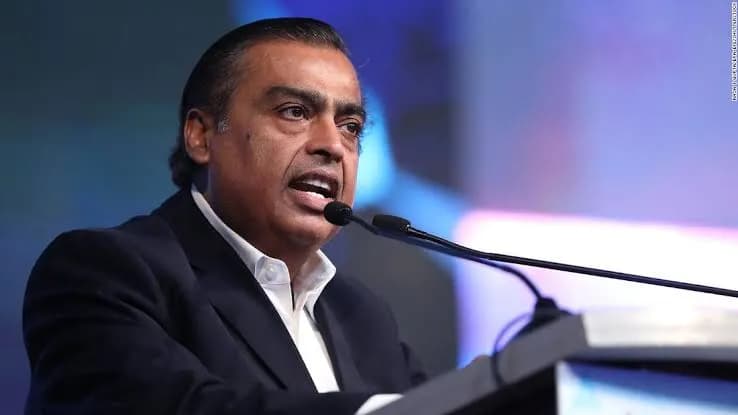
Dangote told Bloomberg he plans to emulate fellow billionaire, Asia’s richest person, Mukesh Ambani.
He said he would invest the profits from Africa’s biggest refinery into yet another sector, having defied warnings and completing the mega fuel plant.
Ambani upended India’s telecom industry with his Reliance Jio Infocomm Ltd. wireless service, by undercutting rivals and quickly becoming the nation’s biggest carrier.
The Indian tycoon lured investments from Alphabet Inc.’s Google and Meta Platforms Inc. for his digital venture in the middle of the pandemic. Ambani is now creating India’s biggest non-bank lender, Bloomberg reports.
Dangote, who has himself expanded beyond cement and food, plans to take after Ambani, who ranks over a hundred spots higher as the 12th richest person in the world, according to Bloomberg.
While his refinery construction is complete and output is ramping up, Dangote still awaits the Federal Government for the price of PMS.
The plant is likely to operate at full capacity in about four months, said the project manager for the refinery, Vartika Shukla, who is also the chairperson of Engineers India Ltd.
Dangote has recalled how he was warned by a high-ranking Saudi minister to shelve the idea of building a refinery, but he ignored the advice.
“The pressure was coming actually from different directions, the pressure of people confusing us, disturbing us every day,” he said.
Now that it’s finished, the refinery has the potential to make Nigeria one of the few nations on the continent that isn’t reliant on fuel imports.
The report states that South Africa has discussed building new refining capacity for more than a decade, but the project has gained little traction.
Ghana announced plans in August for a petroleum complex to include 300,000 barrels capacity.
It’s not something Dangote would repeat, and he doubts any government or group will be able to usurp his plant that stands as the biggest in Africa.
“Ghana will never ever do it. No one else could’ve done this,” Dangote was quoted.
Price war
The Federal Government says it will not interfere in the dispute between NNPC and the Dangote refinery over pump prices of petrol
Special Adviser to the President on Information and Strategy, Mr Bayo Onanuga, stated this when he briefed State House Correspondents at the Aso Rock Villa, Abuja.
Onanuga said since the petroleum market has been deregulated, Dangote and NNPCL, as oil refiners and marketers can set their petrol pump prices according to market forces.
“The PMS price regime has been deregulated. Dangote is a private company. NNPC should not forget it is a limited liability company. Whatever controversy both of them are having is their own problem.
“Even if you go by the terms of the Petroleum Industry Act, NNPC is on its own. Even though it is owned by the Federal Government, the state government and local councils and everything, it is operating as a limited liability company.
“You can see that the private marketers have said that they find the NNPC or Dangote price too much for them, and they may resort to importing fuel,” he explained.
On September 15, 2024, NNPCL claimed that it purchased petrol from Dangote Refinery at N898 per litre. The Dangote refinery refuted this, calling the claim misleading.
It emphasised that the pricing reflects NNPC’s additional costs, including profits and other expenses, and insisted that its petrol is about 15 per cent cheaper than imported fuel.
The dispute also came amid concerns over NNPC’s control over fuel distribution, which prevents independent marketers from accessing Dangote’s products directly. The independent marketers have since, and appealed to the government to allow them to lift petrol directly.
Speaking on Wednesday, Onanuga argued that healthy competition benefits consumers in Nigeria as competitive alternatives tend to keep prices down.
“It is the consumers who benefit if a price war starts. If NNPC fuel [price] is too much, the public market can go to the market and bring in their own fuel and sell at the price that they think is very reasonable and profitable for them. So, the government is not dabbling into this controversy.
“Dangote is running a private company working on his own, and NNPC is a limited liability company that has the right to fix the price of its own product.”