

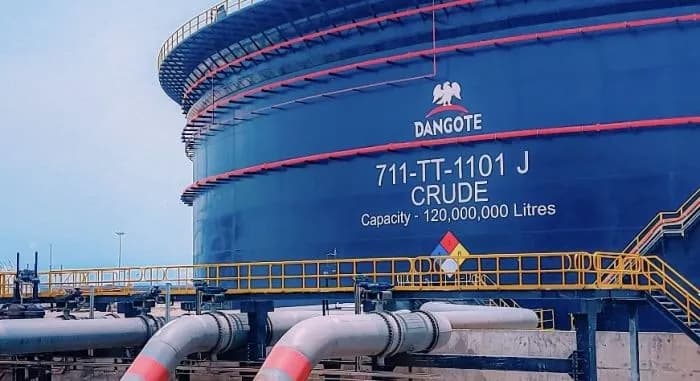
The Dangote Refinery has halted gantry sales as it intensifies reconciliation talks with petroleum marketers and private depot owners, industry sources have confirmed.
An industry source told Petroleumprice.ng that the refinery stopped all gantry sales on Monday to create room for structured engagement and market alignment. Meanwhile, meetings are ongoing with several depot owners, including a session involving Aliko Dangote scheduled for 2 p.m. today. Following the discussions, trade terms, loading modalities, and pricing structures are expected to be finalised.
Stakeholders Meet Over Pricing Disputes
The meeting brings together representatives of the refinery, fuel importers, and private depot operators. Specifically, participants are seeking to resolve ongoing pricing disagreements and establish a clearer trading framework.
“Meetings are currently ongoing with several depot owners, with a session involving Aliko Dangote scheduled for 2 p.m. today to align positions between refinery management and marketers,” the source told Petroleumprice.ng. “The refinery suspended gantry sales on Monday to facilitate the alignment process and allow discussions aimed at finalising trade terms, loading modalities, and pricing structures.”
In recent weeks, pricing differences have created friction between the refinery and private depots, particularly in Lagos and other major distribution hubs. Consequently, stakeholders are working to find common ground and prevent further supply distortions and financial losses
Push for Coordinated Market Structure
Stakeholders now aim to replace price disputes with a more coordinated supply framework. In addition, private depot owners have signalled readiness to support the refinery’s domestic supply strategy, provided pricing arrangements remain commercially viable.
At the same time, the refinery is seeking to strengthen distribution stability and reduce market volatility through structured engagement with operators.
Industry observers say the outcome of today’s meeting could shape short-term pricing direction and product flows across the downstream sector.