

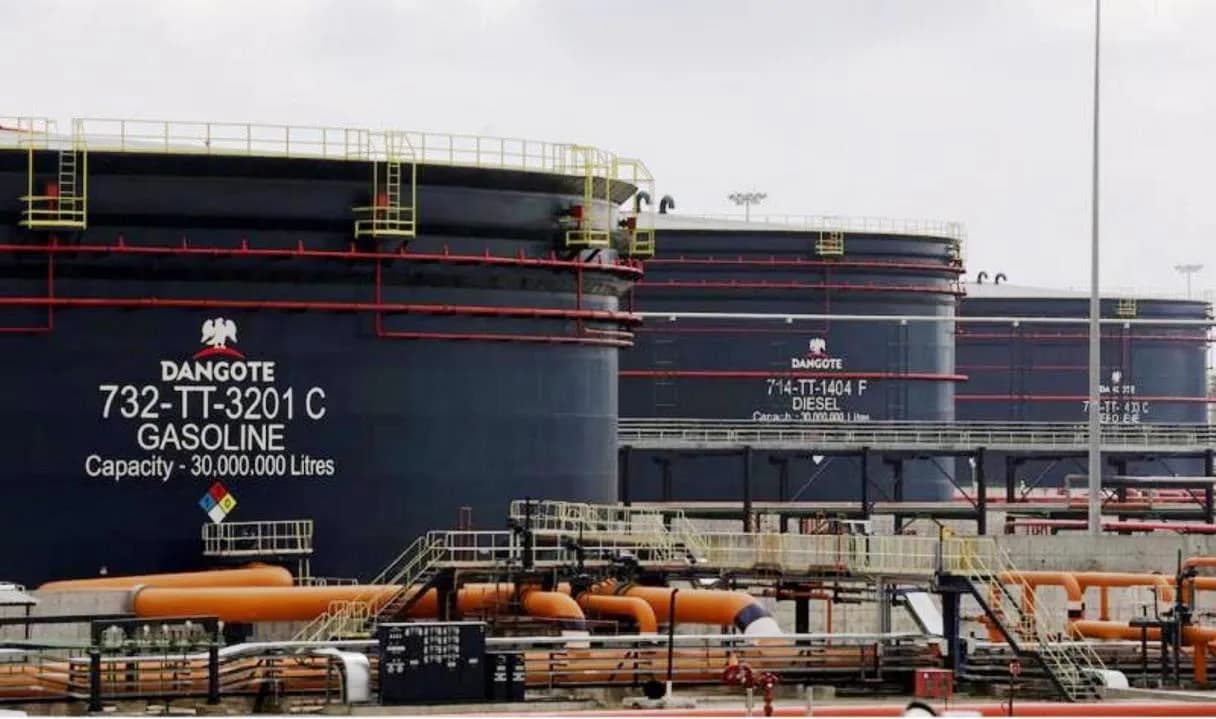
The Dangote Refinery is moving closer to full independence from imported crude. According to a Bloomberg report, the refinery plans to process 100% Nigerian crude oil by the end of 2025, marking a major step for the country’s energy security.
The 650,000 barrels-per-day facility, currently Africa’s largest, is already making big moves. In June, local suppliers provided 53% of the crude, while the rest came from countries like the US, Brazil, Angola, Ghana, and Equatorial Guinea.
“We’re confident we can switch fully to Nigerian crude before year-end,” said Devakumar Edwin, Dangote Group’s Vice President, during a site interview.
Why This Matters
For years, Nigeria exported crude oil and imported refined fuel a costly cycle riddled with inefficiencies and corruption. The Dangote Refinery was built to end this.
Since operations began, it has already helped Nigeria become a net exporter of refined petroleum products. However, the refinery initially had to rely on foreign oil because local suppliers couldn’t meet the demand fast enough.
But things are changing.
“Some of those long-term foreign contracts are set to expire,” Edwin said. “As that happens, we expect more local traders to supply the refinery.”
Challenges on the Ground
Nigeria’s oil sector has faced setbacks from pipeline vandalism to crude theft in the Niger Delta, and the exit of oil majors from onshore fields, leaving smaller local firms to fill the gap.
Despite these issues, Dangote is scaling up. The refinery now processes 550,000 barrels of crude daily, with plans to ramp up even more as supplies improve.
In July and August, the refinery is expected to receive five crude cargoes each month from the Nigerian National Petroleum Company (NNPC). Each cargo carries nearly a million barrels.
Africa Watching Closely
The refinery, commissioned in May 2023, is more than a local project it’s a symbol of Africa’s potential. During a recent tour, ECOWAS President Dr. Omar Touray described it as a “beacon of hope for the continent.”
With the right support, observers believe the Dangote Refinery could drive down fuel prices, reduce import bills, and boost regional trade.
What’s Next?
If local supply continues to rise and the refinery maintains momentum, Nigeria could fully reclaim control of its fuel chain from well to pump by the end of this year.
That means cheaper fuel, more jobs, and less dependence on foreign refineries.