

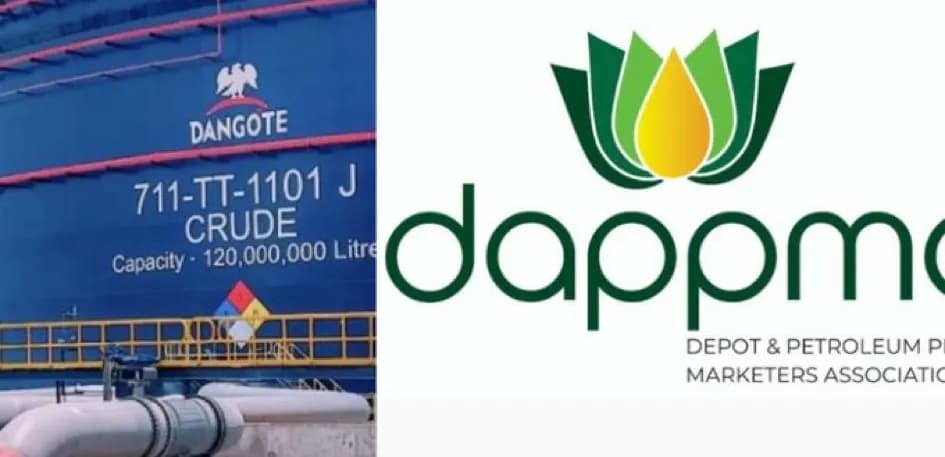
The ongoing dispute between Dangote Petroleum Refinery and the Depot and Petroleum Products Marketers Association of Nigeria (DAPPMAN) has opened a fresh debate over fuel importation, market competition and supply control in Nigeria’s downstream petroleum sector.
The disagreement intensified after Dangote Refinery filed a lawsuit challenging the continued issuance of petrol import licences by the Nigerian Midstream and Downstream Petroleum Regulatory Authority (NMDPRA) to several marketers and the Nigerian National Petroleum Company Limited (NNPCL).
DAPPMAN has since aligned with the regulator, insisting that fuel import approvals remain necessary for supply stability and are fully backed by the Petroleum Industry Act (PIA).
Here are five key issues shaping the growing standoff.
1. The Dispute Centres on 720,000 Metric Tonnes of Petrol Imports
At the core of the legal battle is the approval granted for the importation of 720,000 metric tonnes of Premium Motor Spirit (PMS), also known as petrol.
The licences were issued to NNPCL, NIPCO, AA Rano, Matrix, Shafa, Pinnacle and Bono.
Allocation details show that AA Rano and Matrix each received approval for 150,000 metric tonnes, while NIPCO, Shafa and Pinnacle were allocated 120,000 metric tonnes each. Bono received approval for 60,000 metric tonnes.
Dangote Refinery is seeking to nullify the permits, arguing that fuel imports should only be permitted where domestic refining output cannot adequately meet local demand.
The refinery also maintains that the approvals conflict with an earlier court directive ordering parties to preserve the status quo pending legal proceedings.
2. DAPPMAN Says Import Licences Are Necessary for Fuel Supply Stability
DAPPMAN has defended the NMDPRA’s decision to continue issuing import licences, describing the approvals as part of the regulator’s statutory responsibility to maintain national fuel availability.
According to the association, the licences are regulatory instruments provided for under the Petroleum Industry Act and are intended to prevent supply disruptions within the downstream market.
The group argued that the approvals were not designed to weaken local refining operations but to support energy security during a period of market transition.
DAPPMAN also warned that reversing already-issued permits could disrupt supply planning and create uncertainty for marketers and depot operators that have invested heavily in storage and distribution infrastructure.
3. The Rift Reflects a Wider Competition Debate in the Downstream Sector
Beyond the legal arguments, the disagreement has highlighted deeper concerns over the future structure of Nigeria’s petroleum supply market.
Dangote Refinery’s position reflects growing calls for stronger protection for local refining investments following the development of its 650,000 barrels-per-day refinery.
On the other hand, marketers argue that the downstream sector was established as a competitive market involving multiple operators rather than a system dependent on a single dominant supplier.
DAPPMAN stated that limiting market participation could weaken operational efficiency and reduce supply flexibility across the country.
The association also insisted that independent marketers and depot owners remain critical to nationwide fuel distribution despite rising domestic refining capacity.
4. The Latest Lawsuit Revives an Earlier Face-Off
The current case is not the first legal disagreement between Dangote Refinery and downstream regulators over fuel imports.
In 2025, the refinery withdrew a similar lawsuit challenging import licences issued to NNPCL and several fuel traders.
Although local refining output has increased significantly since then, marketers and regulators maintain that imports still play a role in bridging supply gaps across parts of the country.
The renewed court action suggests that disagreements over the pace of Nigeria’s transition away from imported fuel remain unresolved.
5. The Outcome Could Influence Nigeria’s Future Fuel Import Policy
Industry stakeholders believe the case could shape future decisions on fuel import regulation, competition policy and domestic refining support.
A ruling in favour of tighter import restrictions could strengthen the position of local refiners and potentially reduce dependence on imported petrol over time.
However, marketers argue that maintaining flexible import arrangements remains important for preventing shortages and stabilising supply, especially during periods of fluctuating production or distribution challenges.
The dispute is also expected to influence ongoing discussions around pricing dynamics, supply control, infrastructure investment and the long-term balance between local refining growth and open market competition in Nigeria’s downstream petroleum industry.