

Today, August 15, Nigeria’s downstream petroleum sector braces for a high-stakes showdown between Dangote Petroleum Refinery and private depot owners. In this Petroleumprice.ng analysis, the contest for market dominance is assessed across three decisive factors: price, loading capacity and coverage, and distribution.
Price – Dangote Holds the Edge
Dangote is positioned to outprice private depot owners in the coming months. As a refinery, it can source 100% of its crude domestically under the proposed naira-for-crude policy before year-end. This arrangement will shield it from foreign exchange volatility and allow it to sell fuel at lower prices than import-dependent depots.
Currently, imported petrol prices are heavily influenced by dollar exchange rates, pushing pump prices higher. Once Dangote secures full domestic crude allocation, analysts expect its depot prices to fall well below market averages, putting pressure on competitors.
Loading Capacity and Coverage – Depot Owners Dominate
Private depot owners maintain a clear advantage in infrastructure reach. Nigeria has over 120 private depots strategically located in Lagos, Port Harcourt, Warri, and Calabar, among others. This nationwide presence allows them to serve diverse markets simultaneously and sustain a steady supply even during regional disruptions.
In contrast, Dangote’s refinery operates from a single location in Lekki-Epe, Lagos. While it can handle large-scale production—65 million litres daily across petrol, diesel, and aviation fuel—it will initially rely on road and coastal transport to extend its reach, giving depot owners a distribution head start.
Distribution – Dangote’s CNG Truck Fleet Shifts the Game
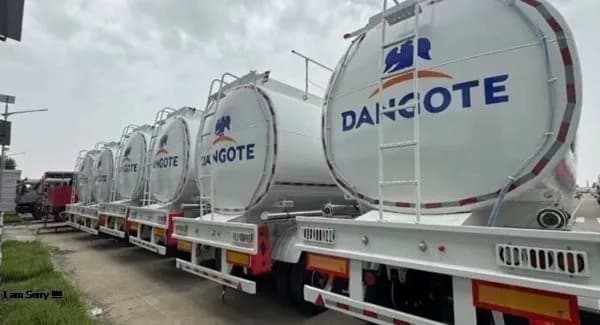
While private depot owners like AA Rano Haulage and Rainoil have extensive fleets and established retail networks, Dangote’s CNG initiative presents a disruptive edge.
AA Rano operates over 600 trucks for its products. Rainoil runs more than 400 tank trucks and 50 LPG trucks, with a consistent renewal policy to maintain fleet health.
However, Dangote’s logistics push is on a different scale. The refinery is investing ₦720 billion to deploy 4,000 CNG-powered trucks nationwide, expected to cut ₦1.7 trillion in annual fuel distribution costs and save marketers ₦1.07 trillion in transport expenses. These trucks will deliver directly to filling stations, industries, and bulk consumers—bypassing coastal depot reliance and costly third-party haulage.
Targeting 42 million MSMEs, the model promises lower energy costs, higher profit margins, and reduced inflationary pressure. Starting August 15, Dangote will launch nationwide direct petrol and diesel deliveries. Coupled with planned CNG filling stations, this could revive dormant retail outlets and curb fuel smuggling. Analysts believe the scale and efficiency of this plan could outmatch the combined trucking capacity of private depot owners, compelling them to rethink their operational strategies.