

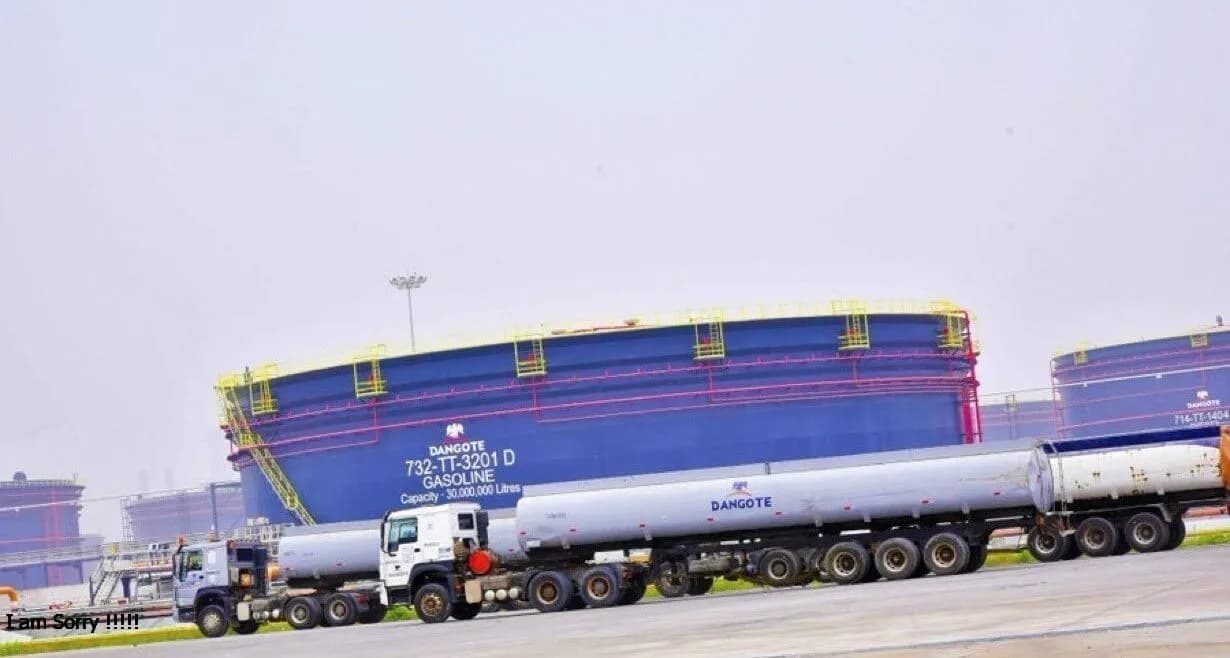
A major point of contention is quietly reshaping Nigeria’s downstream oil market: gantry loading at the Dangote Refinery.
Traditionally, a refinery’s role has been to process crude oil and sell refined products in bulk to depot owners or marketers, who then distribute to truck operators and retail stations. Depot owners, therefore, serve as a critical middle layer between refining and final distribution.
However, Dangote Refinery has adopted a different approach. In addition to refining, it operates a gantry system that directly loads trucks with petrol and diesel. Industry operators say this model places the refinery in direct competition with private depot owners, as it bypasses the traditional supply chain structure.
Scale of Operations
The Dangote gantry is reported to load close to 2,500 trucks daily, a volume that rivals the combined truck-outs of all private depots in the country. This level of direct distribution has raised concerns among marketers and depot operators, who argue that their businesses are being sidelined in the process.
Industry Concerns
Stakeholders note that while the debate around pump prices and crude supply often dominates headlines, the less visible dispute over gantry operations is a key factor in current tensions. Marketers argue that the refinery’s dual role as both producer and distributor reduces their participation in the value chain and alters established market dynamics.
From their perspective, the concern is not only about pricing but also about long-term market structure. If a refinery continues to sell directly to truck operators and retail stations, depot owners warn, their relevance in the supply chain could diminish significantly.
Implications for Petrol Prices
For consumers, the outcome of this dispute has indirect implications for pump prices. With depot owners and marketers feeling squeezed, negotiations over pricing and distribution terms may become more contentious, adding uncertainty to the downstream sector.
Industry analysts suggest that the unfolding situation reflects a broader struggle over control of fuel distribution in Nigeria. While Dangote’s model may improve efficiency by shortening the chain, it also reshapes the balance of power among players in the downstream market.