

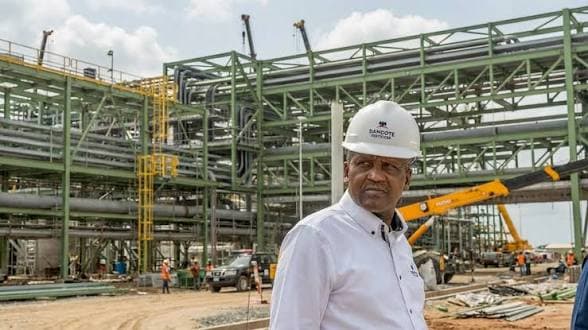
Aliko Dangote's ambitious expansion into East Africa has moved a step closer to reality, with construction of his proposed Sh2.2 trillion ($17.2 billion) oil refinery in Kenya's Lamu County expected to commence before the end of 2026. The planned groundbreaking signals a major milestone for what is projected to become Kenya's largest private-sector investment and one of Africa's biggest refining projects.
Kenyan President William Ruto announced that preparations for the 700,000-barrel-per-day refinery have reached an advanced stage, prompting the government to establish a high-level committee to oversee implementation and ensure the project breaks ground before the close of the year.
To fast-track the investment, Ruto appointed Deputy President Kithure Kindiki to chair a government committee that will coordinate engagement between private investors, employers and relevant government agencies throughout the project's implementation.
"I have asked the Deputy President, Kithure Kindiki, to chair the government committee that is going to work with private investors and employers for what will be one of the largest investments in our country, the investment in the East African oil refinery," Ruto said.
The refinery, backed by Nigerian industrialist Aliko Dangote, is expected to process 700,000 barrels of crude oil per day and create about 60,000 jobs across construction, engineering, logistics, manufacturing, energy and other supporting sectors once development begins.
The project is planned for Lamu County, where it will leverage the strategic deep-water Lamu Port and the Lamu Port-South Sudan-Ethiopia Transport (LAPSSET) Corridor, positioning the facility to serve Kenya and neighbouring East African markets efficiently.
Dangote first unveiled plans for the refinery during the Africa We Build Summit in Nairobi in April, where he expressed readiness to replicate the success of the 650,000-barrel-per-day Dangote Petroleum Refinery in Lekki, Nigeria, provided governments in the region offered the necessary support for the investment.
Once completed, the refinery is expected to significantly expand Kenya's petroleum processing capacity while strengthening the country's ambition to become a regional refining and petroleum products export hub. It is also projected to reduce East Africa's dependence on imported refined fuels by supplying petrol, diesel, aviation fuel and other petroleum products to neighbouring markets.