

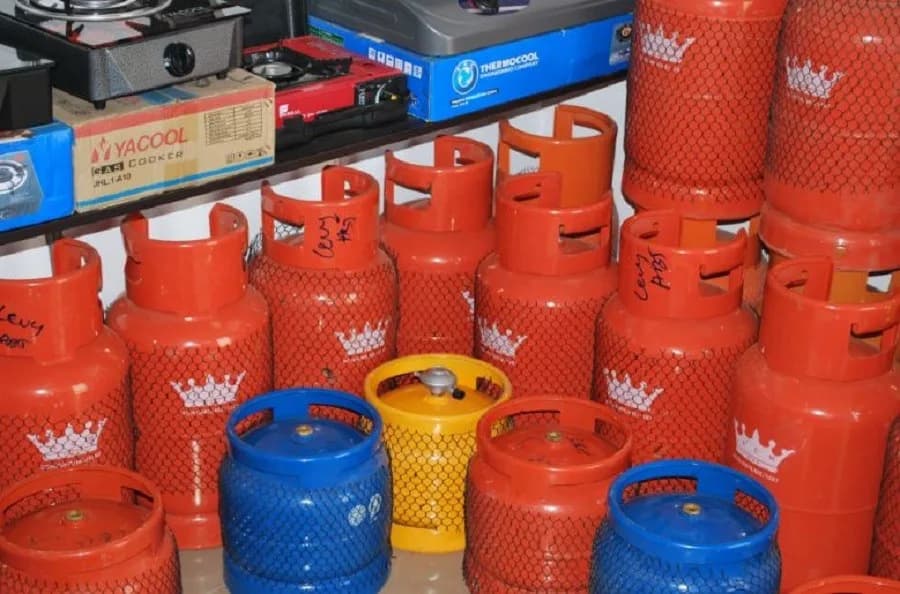
Cooking gas prices across Nigeria have risen sharply, with depot rates approaching ₦1,000 per kilogramme and retail prices climbing to around ₦1,300/kg, as escalating global oil prices and supply chain pressures ripple through the domestic market.
The surge comes amid heightened geopolitical tensions in the Middle East involving the United States, Israel, and Iran, which have unsettled global energy markets and pushed benchmark crude prices higher.
Industry analysts say the spike in international crude and liquefied petroleum gas (LPG) benchmarks is beginning to translate into higher domestic cooking gas prices, increasing pressure on households already grappling with rising petrol and transport costs.
Depot Prices Climb Toward ₦1,000/kg
Depot price checks conducted by Petroleumprice.ng indicate that wholesale LPG prices have climbed significantly across major supply hubs.
In Lagos, Navgas depot quoted LPG at ₦1,000 per kilogram, while Nipco depot sold the product at ₦950/kg.
In Port Harcourt, Matrix depot offered cooking gas at ₦980/kg, while Prudent Oghara depot in Warri also quoted ₦980/kg.
Industry participants say the upward adjustment reflects rising global LPG benchmarks as well as increased logistics costs tied to higher petrol prices.
Retail Prices Rise to ₦1,300/kg
At the retail level, consumers are already feeling the impact of the depot price increases.
According to data reported by Leadership.ng, retail LPG prices in parts of Lagos, including Onike, Iwaya, and Yaba, now range between ₦1,250 and ₦1,300 per kilogramme, compared with around ₦900/kg recorded just a week earlier.
The increase has pushed the cost of refilling a 5kg cylinder to between ₦7,500 and ₦8,167, while 12.5kg cylinders now cost between ₦13,750 and ₦19,200 depending on location and retailer.
Residents say the simultaneous increase in petrol and cooking gas prices is worsening the cost-of-living pressures facing households.
A Lagos resident, Amaka, said the rising prices have strained family budgets.
“Everything is going up at the same time. Transport fares have increased because of petrol, and cooking gas is also rising. It is becoming difficult for an average family to cope,” she said.
Rising Transport and Supply Costs
Retailers attribute the price increases to a combination of higher transportation costs and rising international LPG prices.
Dealers explained that the recent increase in Premium Motor Spirit (PMS) prices has raised the cost of transporting cooking gas cylinders from depots to retail outlets.
“When petrol goes up, everything goes up,” one retailer said. “We transport the gas with vehicles, and the higher fuel cost is transferred to us by distributors.”
Price Pressures Across Major Cities
The upward trend is also visible in other parts of the country.
According to Leadership.ng, LPG prices have surged in Abuja, where a 12.5kg cylinder now costs between ₦17,000 and ₦19,500 in areas such as Garki and Wuse, representing an increase of about 25 per cent compared with the previous week.
In Port Harcourt, refills for 12.5kg cylinders range between ₦18,500 and ₦21,000, while markets in Kano report prices between ₦9,000 and ₦10,500 for 6kg cylinders.
Traders say rising global feedstock prices, shipping delays linked to Middle East tensions, and higher domestic transport costs are contributing to the surge.
Global Oil Market Driving Domestic Prices
Energy analysts note that Nigeria’s LPG and fuel prices are heavily influenced by international benchmarks and foreign exchange dynamics.
Recent attacks and tensions around the Persian Gulf, including concerns about possible disruptions around the Strait of Hormuz, have pushed crude oil and LPG prices upward globally.
Because Nigeria relies partly on imported LPG despite its gas reserves, fluctuations in global markets quickly feed into domestic prices.
Analysts warn that if tensions between the United States, Israel, and Iran continue to escalate, global energy prices could remain elevated, placing further upward pressure on both petrol and cooking gas costs in Nigeria.
For consumers, the combined effect of rising transport fares, higher food prices, and increasing energy costs is steadily eroding household purchasing power.